Clarkston Garden FC

Location and general information

Closed
Location Clarkston, USA
Start date 01/01/2022
End date 12/31/2022
Cost of the project €59,435
Foundation funding €29,155
Project identifier 20210409
Partners Soccer in the Streets
Categories Access to Sport - Conflict victims - Gender Equality - Infrastructure and equipment - Personal development

Context

Since the mid-1990s, the American town of Clarkston in Georgia has been the resettlement point for thousands of displaced persons from around the world, earning it the title of the ‘Ellis Island of the South’. Soccer in the Streets uses football as a common language to help displaced youngsters integrate into society.

Clarkston’s Garden FC project builds on this common language and helps youth – especially girls – become young leaders who can contribute to a healthy and equitable community.

Project content

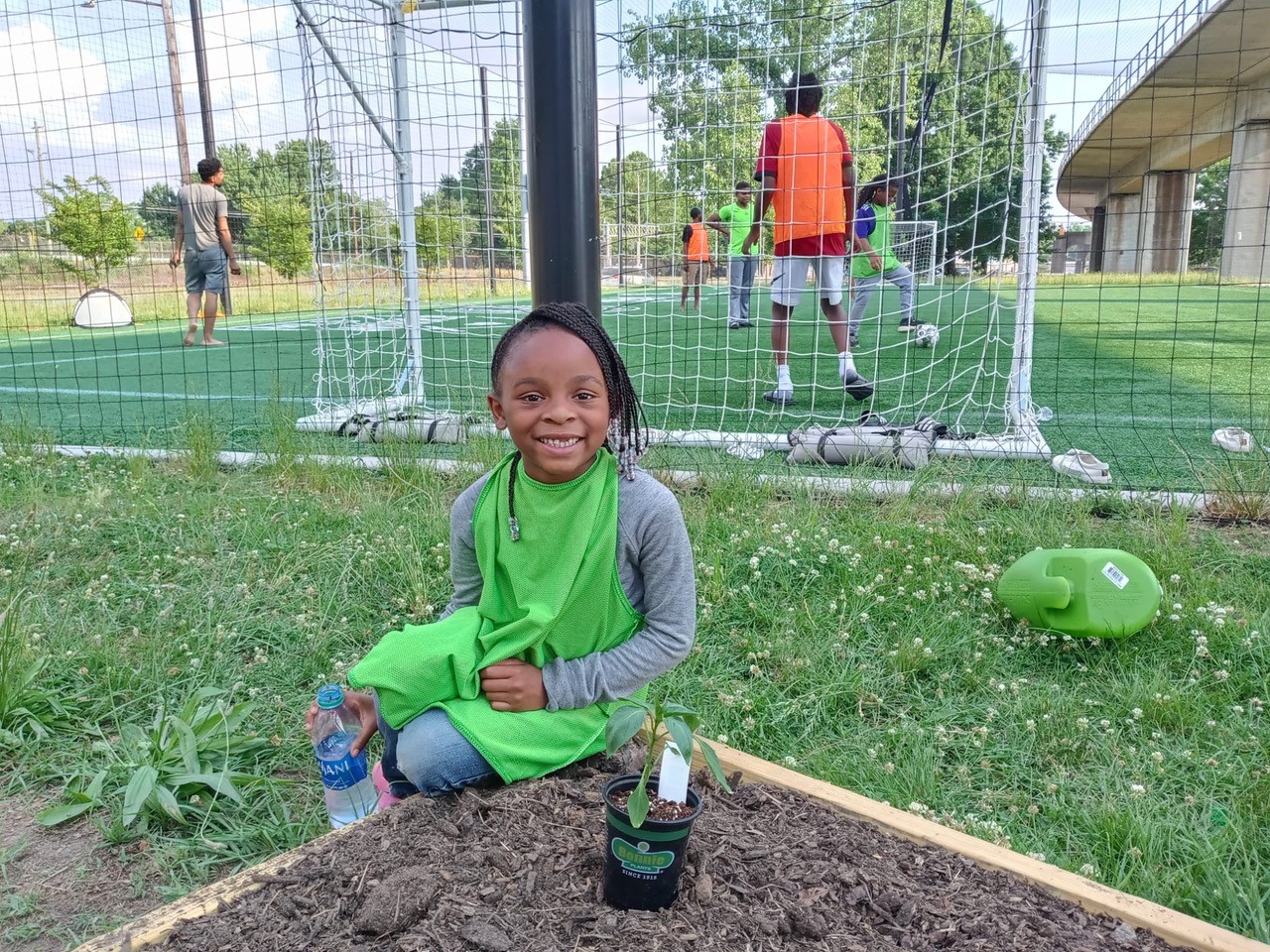
The Garden FC project uses community gardens located at the football pitch as a hub for activities that enable young people to establish a relationship between sport, nutrition, food security and community well-being. Football training includes on-field leadership activities. After training, youngsters and their families cultivate the gardens together and are able to enjoy the food they harvest. A differentiated experience for girls addresses specific challenges they face both on and off the field.

Objectives

  • Give displaced youngsters access to football
  • Educate players on the link between nutrition, physical activity and well-being
  • Teach players how to grow their own food
  • Build youth leadership capacity
  • Create differentiated experience for girls

Project activities

  • Football training sessions
  • In-practice leadership sessions with a focus on the girls
  • Nutrition workshops
  • Gardening training
  • Community gardening events

Expected results

  • 150 players take part in football sessions
  • 30% of players complete the nutrition and well-being curriculum
  • 100% of girls receive leadership sessions
  • 35% of players show improvement in self-management and relationship skills

Partner
Growing up with dignity

Location and general information

Ongoing
Location Madagascar
Start date 02/01/2022
End date 06/30/2023
Cost of the project €189,354
Foundation funding €75,742
Project identifier 210951
Partners Grandir Dignement
Categories Access to Sport - Children with disabilities - Gender Equality - Infrastructure and equipment - Personal development
Context

In Madagascar, the detention conditions of the approximately 950 incarcerated children are extremely precarious and detrimental to their proper development. Their basic needs (food, health and hygiene) are not even minimally met. Children are regularly victims of serious violence from prison officers, who are often unaware that children have rights. Finally, there is virtually no preparation for their socio-educational reintegration.

Project content

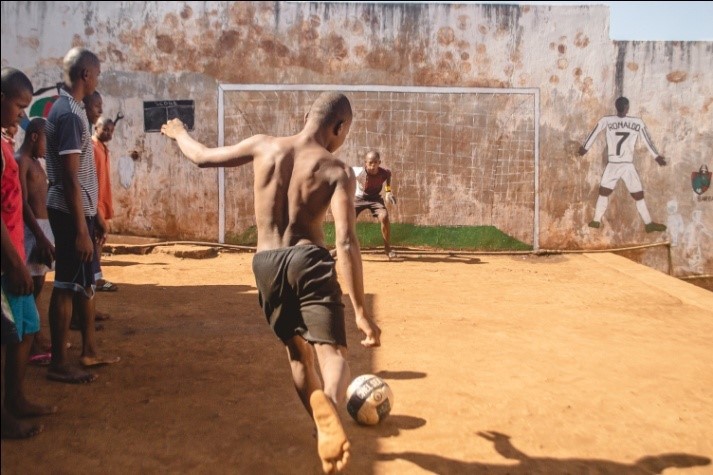
The project will run for 18 months and support 400 children (girls and boys) in six jails and 100 children living in two Grandir Dignement post-incarceration centres or supported by social workers. The aim is to provide educational, sports, literacy and occupational training activities, to improve their detention conditions and socio-educational integration so that they can live independent lives when they are released. The project involves daily contact with activity leaders, educators and trainers, six days a week both inside and outside prisons.

Objectives

  • Improve the detention conditions and socio-professional integration of incarcerated children.
  • Provide 400 incarcerated girls and boys with sports/educational activities and occupational trainingHelp
  • 100 children or teenagers to reintegrate into society after their release
  • Educate families and prison officers about children's rights, educational topics and gender issues
  • Raise awareness among the general public to combat stigmatisation

Project activities

Objective 1

  • Educational activities: (i) social and educational support (individual interviews for newcomers, individual information sheets, monthly individual interviews and weekly educational schedules), (ii) home and family visits to involve the families in the process and (iii) life project’ building and preparation for social reintegration.
  • Sport and cultural activities to improve well-being : (i) artistic and cultural activities and (ii) sports activities.
  • Occupational training and literacy relevant to the life project: (i) literacy activities and (ii) occupational training.

Objective 2

  • Educational activities : (i) educational support, (ii) home and family visits and (iii) life project building and preparation for social integration.
  • Sport and cultural activities: (i) artistic and cultural activities, (ii) sports activities and (iii) sports tournaments with other organisations.

Objective 3

  • Raise family awareness of educational and social issues : (i) identify topics for family workshops and (ii) workshops.
  • Raise awareness of educational and social issues among prison staff and social workers: identify topics for workshops and (ii) workshops.

Objective 4

  • Establish dialogue with the communities and local authorities to combat stigmatisation: (i) meetings with judiciary and ministry of justice officers and (ii) meetings with local organisations, local authorities and community leaders.
  • Raise awareness among the population to combat stigmatisation: (i) run an awareness communication campaign and (ii) distribute an awareness media release.

Expected results

Objective 1

  • 400 incarcerated children given support
  • Increase activities in prison: (i) 1 session of artistic and cultural activities per week/prison and (ii) 2 sessions of sport, literacy activities and occupational training per week/prison
  • 80% of families visited

Objective 2

  • 100 children receive support after their release
  • 50 children involved in tournaments with other organisations
  • 80% of families visited

Objective 3

  • 36 workshops with families: quarterly in six jails
  • 36 workshops with prison staff: quarterly in six jails
  • 6 topics for workshops with families and prison staff

Objective 4

  • 18 meetings with judiciary and ministry of justice officers: half-yearly in six localities
  • 18 meetings with local organisations, local authorities and community leaders: half-yearly in six localities
  • 6 radio awareness campaigns broadcast three times each in two localities
  • 12 awareness press releases distributed three times each in four localities

Partner

Kick the Ball, Save our Wildlife

Location and general information

Terminé
Location Kenya
Start date 02/01/2022
End date 07/28/2023
Cost of the project €20,337
Foundation funding €17,337
Project identifier 20210215
Partners Water4Wildlife
Categories Access to Sport - Infrastructure and equipment - Personal development

Context

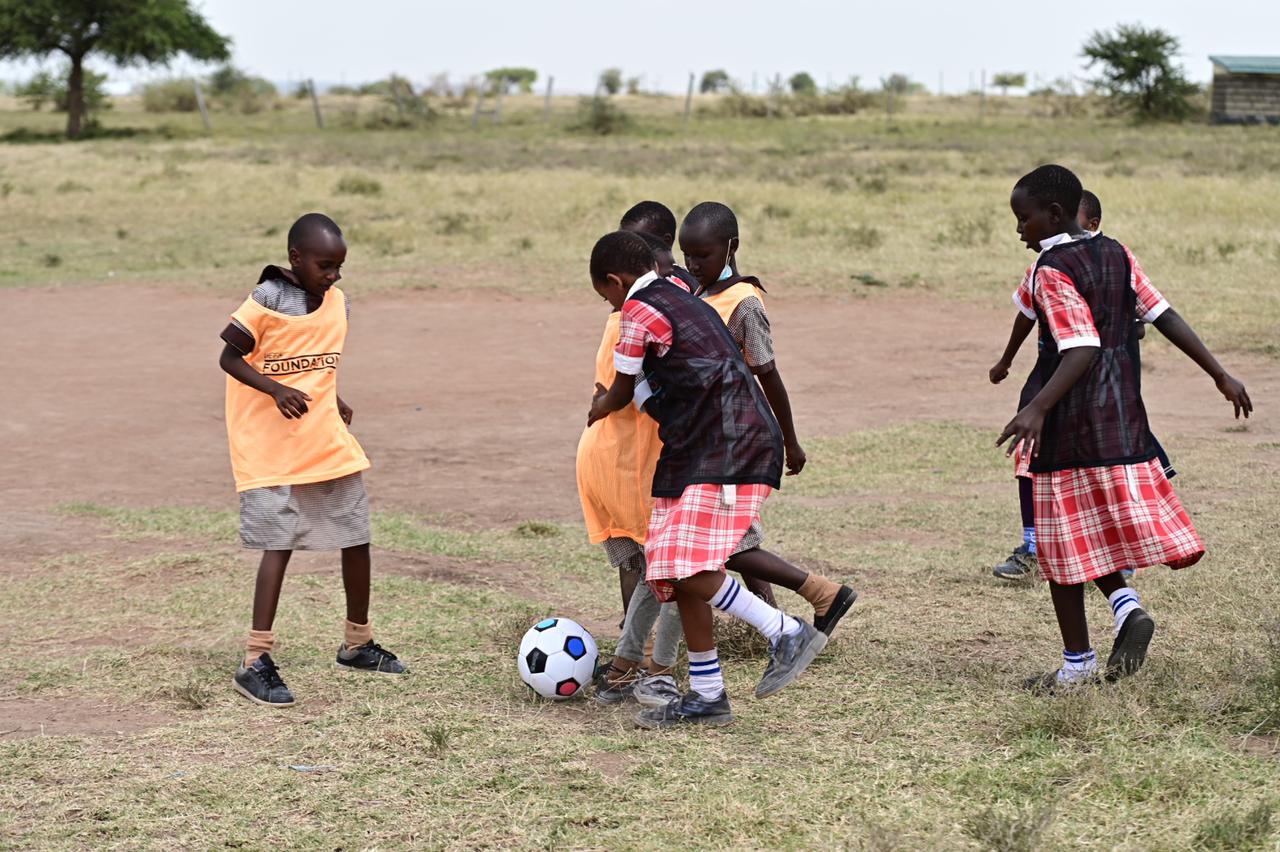
Maasai Mara is an ecosystem of wildlife conservation and is home to several conservancies hosting both humans and wildlife. Like most children, the children within the conservancies love to engage in sports especially football during their leisure time. However, being a remote area, there is a lack of adequate facilities despite having access to public land in schools which could be used to construct a conducive football pitch that will enable children to play and have fun. During the sessions, community mobilizers and local rangers will be invited to raise awareness on wildlife conservation to both the players and spectators.

Project content

We will enhance wildlife conservation by organizing football activities integrated with sessions of creating awareness about the importance of wildlife conservation. Further, in collaboration with other local partners, we will support friendly matches for schools within the wildlife conservancies and work with community mobilizers and local rangers to share information on wildlife conservation.

Objectives

The main objective of the project is to use football as a fun activity for children to learn more about wildlife conservation. Through football, we will create awareness about wildlife conservation and its importance thus encouraging children to become future wildlife conservationists.

Project activities

  • Working with game rangers to sensitize the children on the importance of wildlife conservation during football-friendly matches.
  • Construction of a football pitch and procurement of sports
  • Continuous monitoring and evaluation of the project throughout the project execution
  • Launching of the project to the children of Ngosuani Primary School and Ngosuani
  • Handing over the project to the school and

Expected results

By the end of this project, it is expected that 1,300 children will have access to a good football pitch and football kits. Within the project implementation, we involve a series of sensitization sessions that will bring positive impact to both the children of Ngosuani Primary School and the Ngosuani Community towards embracing wildlife conservation thus resulting in a future generation of wildlife conservationists.

Partner

Learn&Play – Equal educational and sports opportunities for all children!

Location and general information

Terminé
Location Montenegro
Start date 02/01/2022
End date 05/31/2022
Cost of the project €78,180
Foundation funding €59,180
Project identifier 20210481
Partners NGO Parents
Categories Access to Sport - Gender Equality - Infrastructure and equipment - Personal development

Context

Although they are enrolled in school, vulnerable children often do not attend regularly, and often drop out at an early age due to difficulties fulfilling basic needs (food, shelter).

  • Only 7 % of them continue to high school (source: UNICEF). After primary school, girls often get married (aged 14–15) and boys start to work on the street collecting raw materials.
  • Most are victims of discrimination, rejected by their peers and socially very isolated.
  • Alcohol, deviant behaviour, and violence are often present in their lives.
  • Their parents are often unable to support them, so the youngsters do not acquire basic knowledge and have very low school achievement, with only basic reading and writing.
  • Roma minority children have additional problems as they do not speak Montenegrin well, which is a further barrier to social inclusion.
  • None of them have ever had an opportunity to do any sport and are additionally deprived of opportunities to improve their health or have social interactions with their peers.

Project content

The Learn&Play project will help these 1,400 children, through sport and education, to socialise and become involved in peer activities to improve their social skills, which are neglected because of extreme poverty.

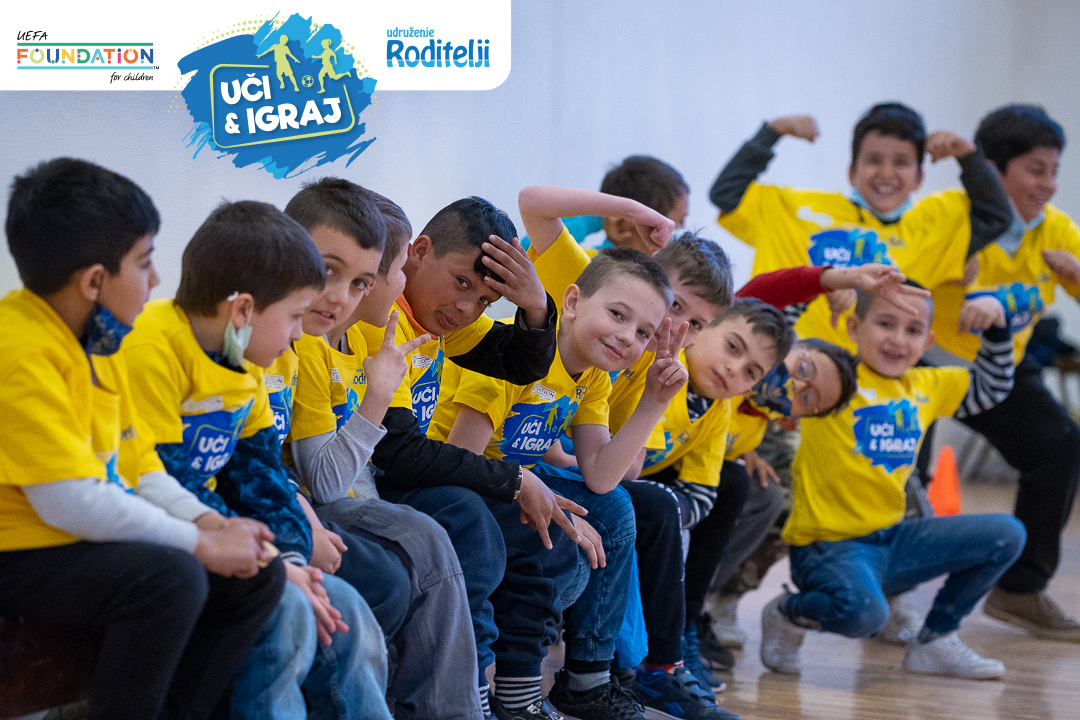
Equal educational and sports opportunities for all children! The project will improve opportunities for children aged 6–12 who live in poverty in suburban and rural areas of Podgorica, by supporting their education and social inclusion through sport. The project consists of football training, literacy classes, and a final event, the Learn&Play Cup. The project will help children turn their lives around by finishing school and gaining social skills.

Objectives

Support education and social inclusion of 1,200 children who live in extreme poverty.

Specific objectives

  1. Provide access to sport – free football training for 1,200 children who live in extreme poverty.
  2. Provide free literacy lessons for 400 children.
  3. Increase the children’s self-esteem, motivation, and social skills.
  4. Promote equal opportunities for all children among the main stakeholders.

Project activities

Organisation of free football training in 10 schools

Select ten elementary schools in Podgorica, with a total of 1,200 pupils, in coordination with the ministry for education, culture, science and sport.

Selected schools will be in areas with the greatest poverty.

2 near to an informal settlement with mostly Roma children

5 in suburban areas

3 in rural areas

Football training, twice a week for 120 children per school in two groups:

Years 1–3 (6 to 8)

Years 4–6 (9 to 12)

Each group will consist of two teams of 30 children, both boys and girls, with a minimum of 30% of girls, and 5% of children with disabilities. Each team will be trained by one coach (licensed physical education teacher from the school or a licensed coach) and one volunteer.

Training programme

This activity will involve 20 physical education teachers or licensed coaches and 20 volunteers. The training will focus specifically on working with children who live in poverty and offer guidance on its mission and values: equality, social inclusion, tolerance, teamwork, stressing the importance of education.

Providing sports equipment:

  • T-shirts will be provided for all 1,200 children (branded with project logo and UEFA logo)
  • Donated second-hand sneakers will be provided for the most vulnerable children
  • Football jerseys and sneakers with the name of their school will be provided for 400 children taking part in the tournament

Visits by famous football players

To motivate the children and promote the project, Montenegrin football players will visit each school and play football with the children.

 Free literacy classes

  1. a) In coordination with the schools, a group of children with literacy difficulties will be chosen for support.
  • 400 children will be provided with free literacy classes (40 children per school): 50% will be girls, 40% Roma children, 5% children with disabilities.
  • Children will be divided into two groups, regardless of age or grade: children with no knowledge of reading (including Roma children who do not speak Montenegrin) and children with reading skills below the normal level for their age.
  • 90-minute classes will be held in schools once a week.
  1. b) Recruiting and training coordinator and volunteers who will help children to learn
  • This activity will involve ten learning supervisors (Montenegrin language teachers) and 40 volunteers. The supervisors will develop learning plans and supervise the volunteers.
  • A training programme will be organised for all of them, focusing on the specific approach in working with children who live in poverty and guidance for the project’s mission and values: equality, social inclusion, tolerance, teamwork, and stressing the importance of education.

Learn&Play Cup – one-day football tournament

  • The Learn&Play Cup will be the first tournament of its kind in Montenegro, promoting social inclusion, equal opportunities and the importance of education and sport for all children.
  • 400 children (4 teams from each selected school) will take part in the tournament.
  • A detailed schedule of football matches will be drawn up in cooperation with the Football Association of Montenegro.
  • The tournament will be organised in the country’s largest stadium, belonging to FC Budućnost, and will resemble regular matches in every way – anthem, lights, security, judges, medals, and a trophy.
  • Football jersey and sneakers will be provided for all children taking part.
  • Transport and snacks will be provided for all children taking part.
  • After the tournament final, a press conference will be held to highlight the project’s achievements and results.

Expected results

  • 840 will children take part in sport for the first time in their lives (a total of 1,200 children given training).
  • 400 children learn to read and write.
  • 1,200 children will improve football skills, self-esteem, self-awareness, motivation, social skills.
  • Increased awareness of social isolation and education challenges of children living in poverty and importance of creating equal opportunities for all.

Partner

Extension of the Unis Vers le Sport school in Mali

Location and general information

Closed
Location Sala, Mali
Start date 03/01/2022
End date 03/31/2022
Cost of the project €56,800
Foundation funding €36,000
Project identifier 20210653
Partners Unis Vers le Sport
Categories Access to Sport - Gender Equality - Infrastructure and equipment - Personal development

Context

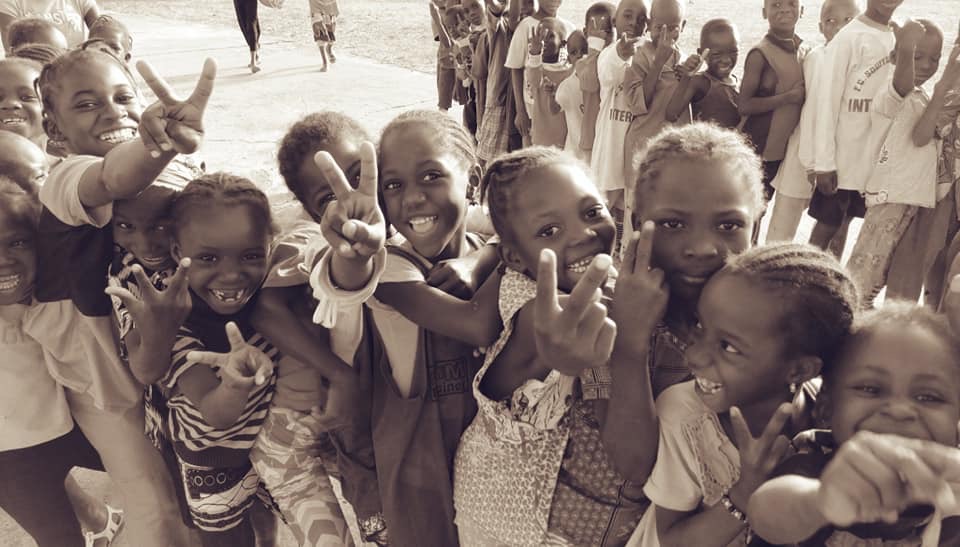
For many years, Mali has been shaken by economic and political instability that has left most of its population out of work and struggling to survive. Despite these difficult circumstances, the Unis Vers le Sport school has been able to function normally since it was founded with UNESCO’s support in Sala, 30km from Bamako, in 2008.

Most of the region’s inhabitants make their living from agriculture or diving for sand from the bed of the river Niger. As many families cannot afford to send their children to school, they often have to work in the fields or the river.

Project content

This year, the school aims to take in more children to give them an eduction and better future prospects. The project will build a new classroom, with space for 50 pupils, and recruit two extra primary-level teachers.

Objectives

  • Increase the school’s capacity.
  • Improve the conditions and the quality of the education.

Project activities

The Unis Vers le Sport school is accredited by the Mali ministry of education and applies the national curriculum.

The school is mixed and every day after classes, the pupils do a variety of sporting activities, under the supervision of the teachers, to improve their physical and mental well-being and help them to thrive.

Once they have finished school, the children can go on to learn a trade in the partner training centre in Bamako.

Expected results

  • 50 more girls and boys in school.
  • 2 extra teachers.
  • Better teaching conditions.

Partner

Building More Than a Place to Play in the Brazilian Northeast

Location and general information

Closed
Location Brazil
Start date 06/01/2022
End date 12/31/2023
Cost of the project €165,286
Foundation funding €137,112
Project identifier 20211117
Partners love.fútbol
Categories Access to Sport - Infrastructure and equipment - Personal development

Context

The UN Convention on the Rights of the Child states that children have the right to play and recreation. However, the conditions are not met everywhere for children to enjoy their rights. In Brazil, according to the Brazilian institute of geography and statistics, only 27% of public schools (2017) have sports facilities and 78% of children (2019) do less exercise than is recommended by the WHO.

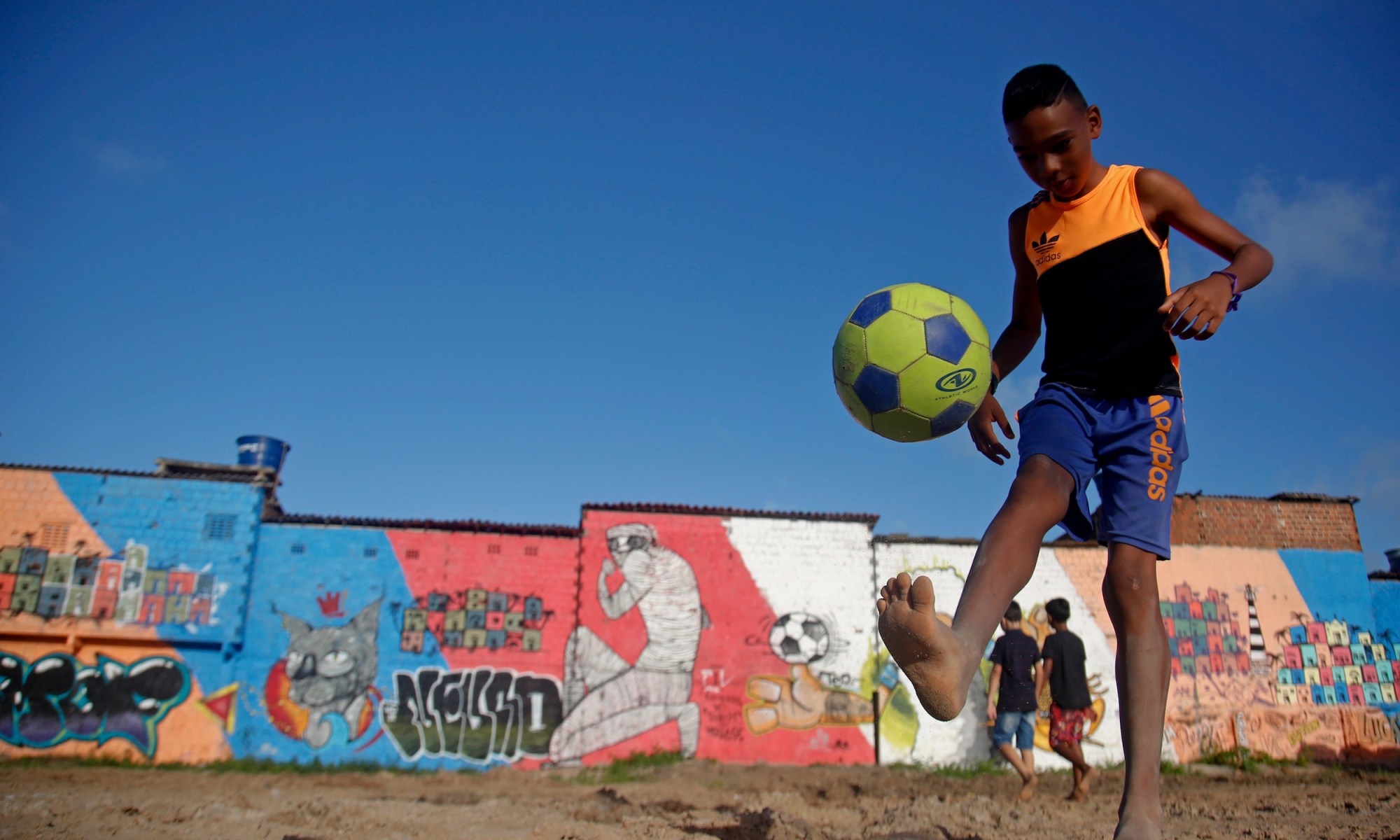
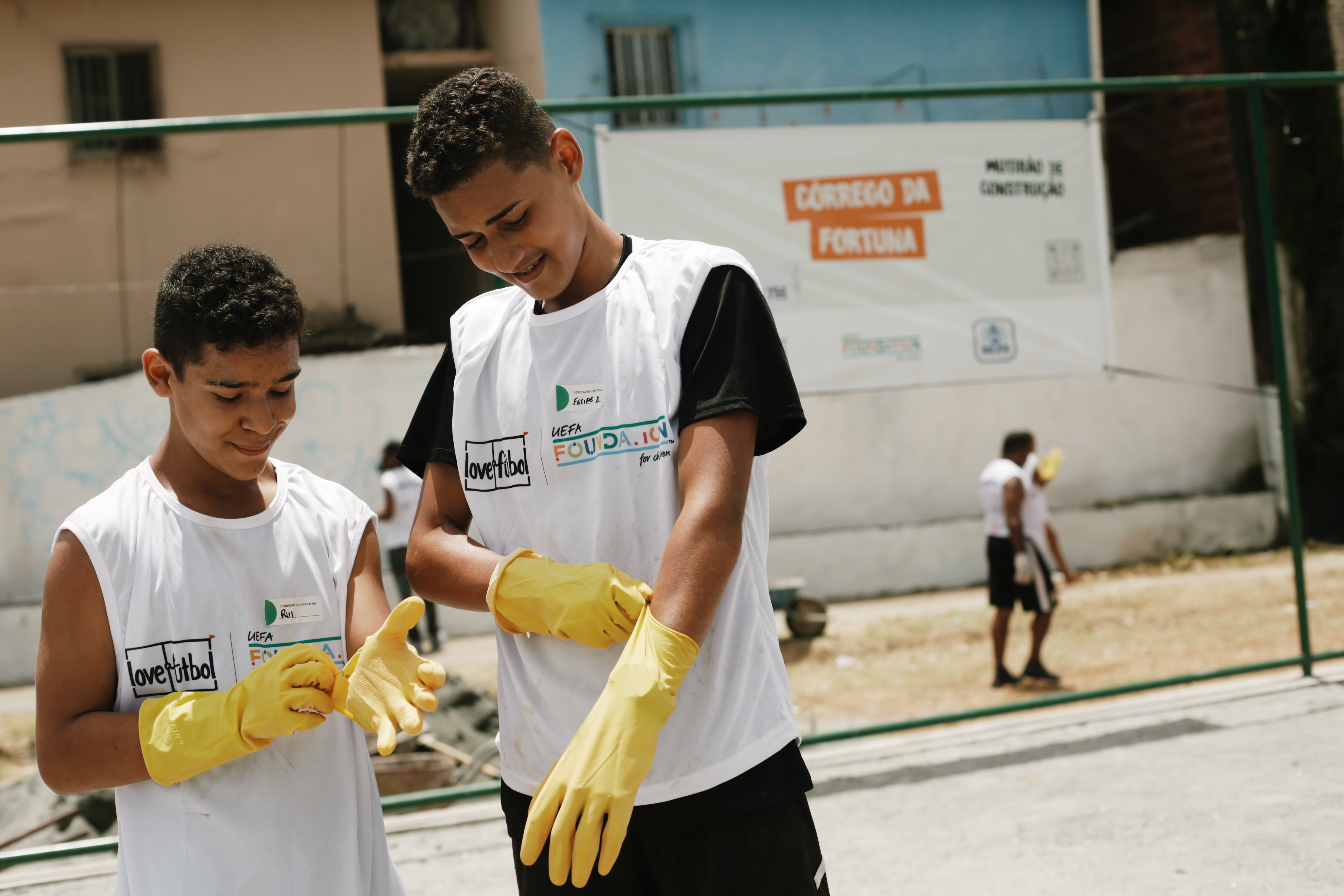
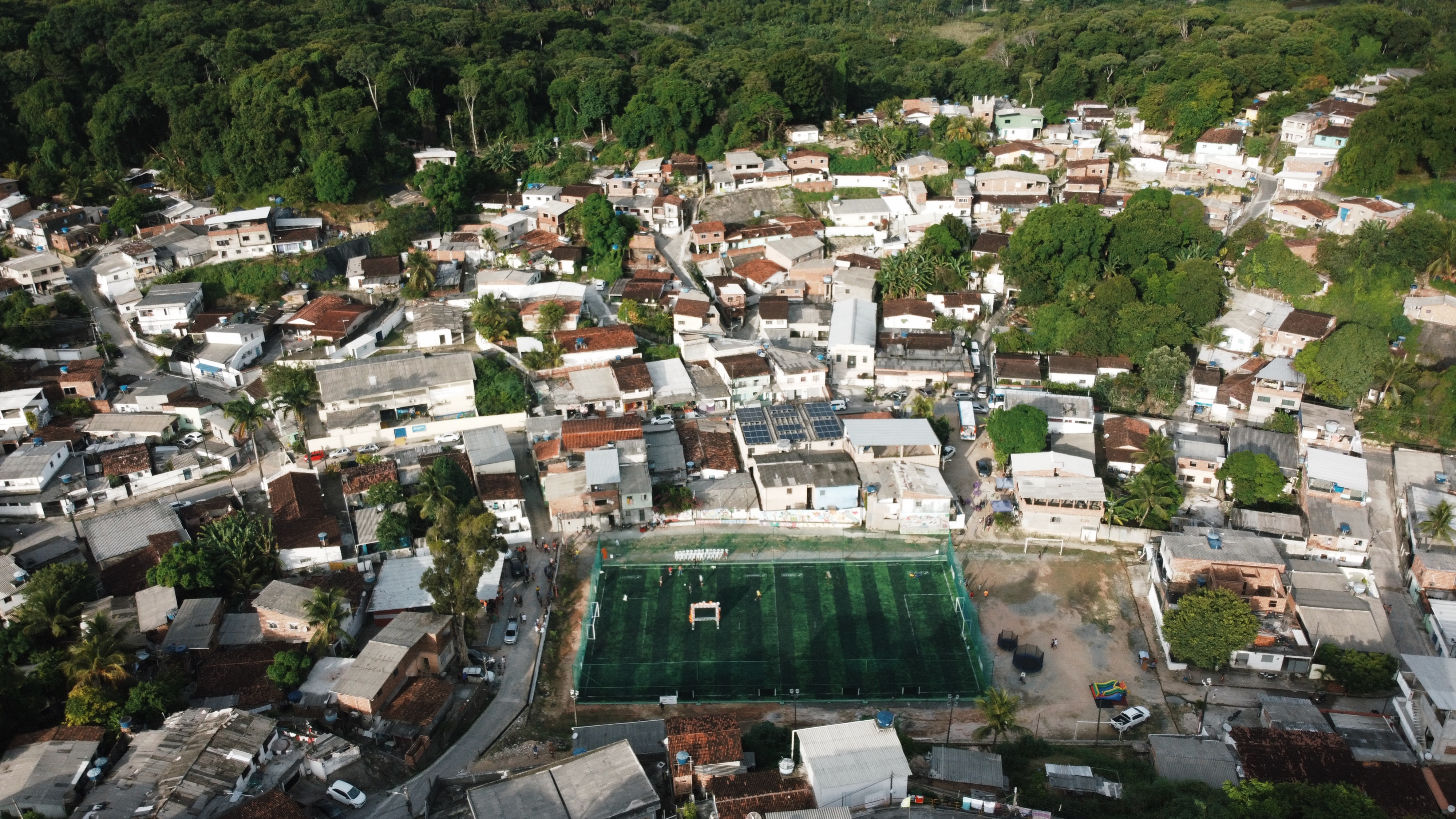
The proposed project will be run in the Córrego da Fortuna community, a low-income settlement in Recife, where poor urban planning mirrors this lack of playgrounds and quality education. The aim is to mitigate this problem by creating opportunities for sport, education, arts, and psychological support. As many as 150 community volunteers between 16 and 60 years old will be recruited. The facility will serve as a community centre and a platform for activities by the university, presentations by local cultural groups, and a sport for education programme for 75 girls between 7 and 17 years old.

Project content

love.fútbol will promote a cross-sector partnership between the Federal Rural University of Pernambuco, Recife city hall, local programme partner Instituto Geração 4, and a broader range of community leaders and organisations to plan and build a football pitch that will serve as a sustainable platform for sports and educational sessions, a point of integration between the community and the local university, and a reference for municipal public policy.

The project methodology will follow what we call the ‘hardware x software’ model. At the grassroots level, love.fútbol will form partnerships with the broader target community. We will engage the key stakeholders (local government, parents, teachers, cultural groups and other youth advocates) to plan and develop safe and inclusive sports facilities (the hardware). At the organisational level, we will actively train and oversee a domestic organisation to deliver a sport for development programme (the software) that will focus on gender inclusion, English language classes and psychological support.

Objectives

  • Use love.fútbol's award-winning methodology and its 15 years' experience in developing community-driven sports spaces to establish a football facility in a vulnerable community in the Brazilian Northeast
  • Engage and empower the local community to build and take ownership of this space dedicated to sport and education
  • Once the space is inaugurated, deliver two-weekly sports for education sessions for 75 children
  • Partner with the city hall and the local university to keep the space safe and provide a daily schedule


Project activities

  • Joint creation of a community-driven sports facility: love.fútbol will partner with several actors and the broader community through engagement meetings, the creation of a neighbourhood network, and two collective building days to create a facility that will offer children a platform for sports and education. This network will also be trained in the use of management tools to activate and sustain the pitch long-term
  • Weekly sports sessions for 75 girls run by love.fútbol and local organisation Instituto Geração 4
  • Football and Zumba classes run by Recife city hall

Expected results

  • A 48x27m artificial turf sports court, including fences, LED lighting, sports equipment, community garden, and artworks
  • 150 community volunteers recruited and trained who will donate 3,500 hours to the planning, delivery, activation and sustainability of the facility
  • 75 girls taking part in a weekly sports programme, including English language classes, and psychological support, with the aim of doubling this number in the second year
  • 1,500 local children using the space and doing in sports activities

Partner

MINE/ COVID-19 Risk Education

Location and general information

Closed
Location Cambodia
Start date 01/01/2022
End date 12/31/2022
Cost of the project €129,520
Foundation funding €129,520
Project identifier 20210613
Partners Spirit of Soccer
Categories Access to Sport - Employability - Gender Equality - Infrastructure and equipment - Personal development

Context

For over 30 years, Cambodia has suffered from landmines and explosive remnants of war (ERW). Children are the most vulnerable and account for over 50% of the casualties.

Survivors are left maimed and traumatised, often removed from school, depriving them of an education, then further stigmatised as a burden to both their family and the broader community.

Since the Spirit of Soccer programme started in Cambodia in 2006, the land mine casualty rate has dropped from 875 to 65 per year in 2020. In simple terms, without our intervention, these and similar tragedies would continue unchecked.


Project content

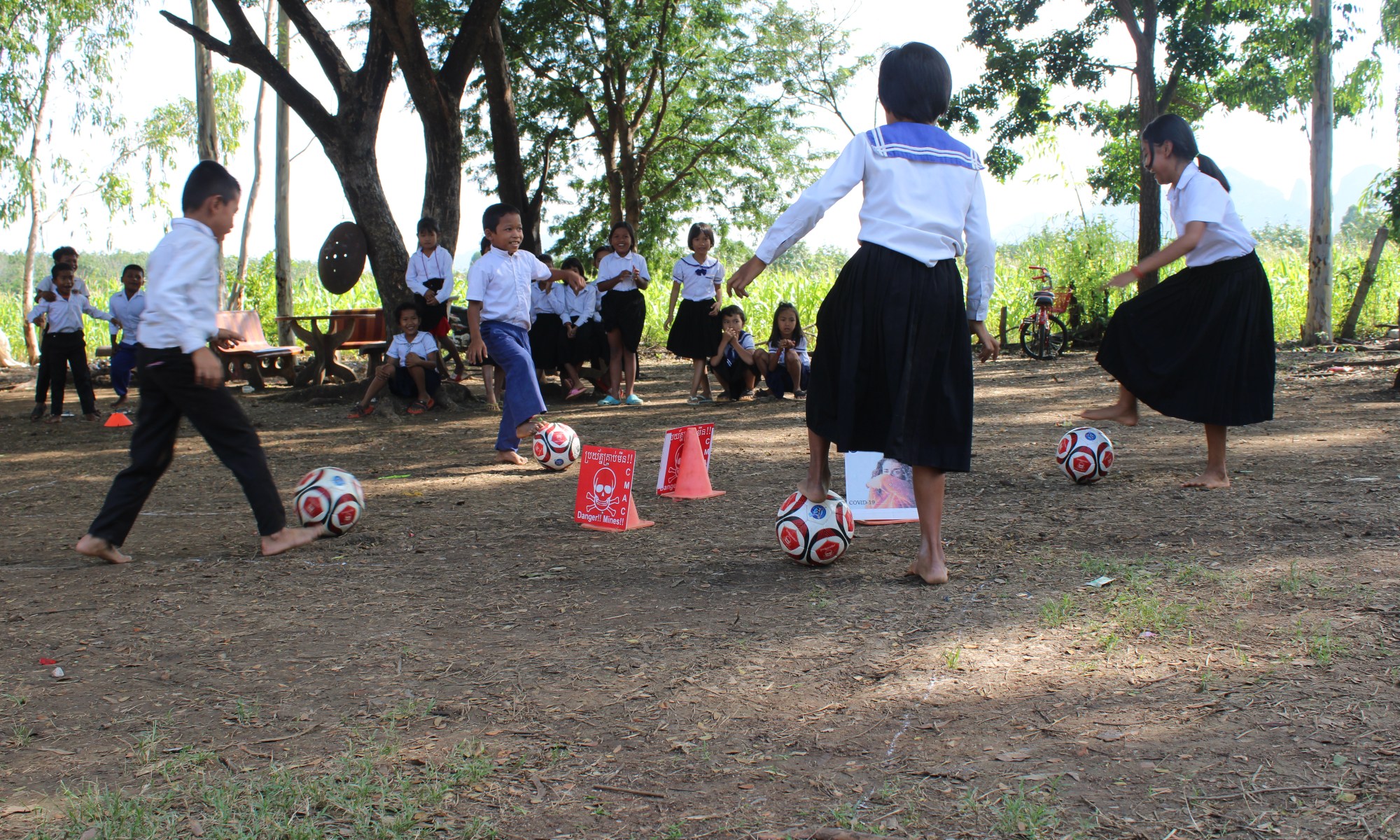
Our mission is to use soccer to educate children living in conflict and post-conflict regions about the dangers of landmines, ERW and COVID-19.

We educate, train and employ local coaches and teachers to use our curriculum. The easy-to-understand football-related lessons teach children how to identify and avoid specific risks and unexploded ordnance. The culturally sensitive, fun and inclusive, approach creates a safe environment that provides healthy physical activity, hope and happiness.

Objectives

  • 14,000 youngsters (60% Male/40% Female) involved in professionally delivered football activities
  • 40,000 indirect beneficiaries of education and coaching workshops, local tournaments, peer-to-peer and multimedia campaigns, kits and outreach materials (posters and notebooks)
  • 60 local coaches trained in COVID-19 and ERW risk education, youth coaching at D licence level
  • Candidates for the workshops will include 25 Khmer United Nations peacekeeping deminers at the request of the ministry of defence

Project activities

  • Running coaching clinics through local schools in mine-impacted communities for 14,000 at-risk children
  • Expansion of field educational materials for ERW accidents and COVID-19 prevention measures to indirectly reach 40,000 youngsters
  • Ongoing liaison with the national Mine Action working group
  • Organising three football tournaments involving 150 players each (60% boys, 40% girls), delivering football coaching, ERW accident and COVID-19 risk reduction education
  • Preparedness training and education materials for players
  • Door-to-door training in the event of school closures

Expected results

  • Distribute 400 footballs and 14,000 ERW notebooks through coaching clinics and tournaments
  • Reach a target of 14,000 direct and 40,000 indirect participants, within a wide demographic of coaches and leaders, local youngsters, adults, educators, ministry officials and ERW working groups

Partner

Football4Good

Location and general information

Closed
Location Thailand, Chiang Mai
Start date 01/01/2022
End date 12/31/2022
Cost of the project €30,288
Foundation funding €30,288
Project identifier 20210567
Partners Baan Dek Foundation (BDF)
Categories Access to Sport - Conflict victims - Gender Equality - Infrastructure and equipment - Personal development

Context

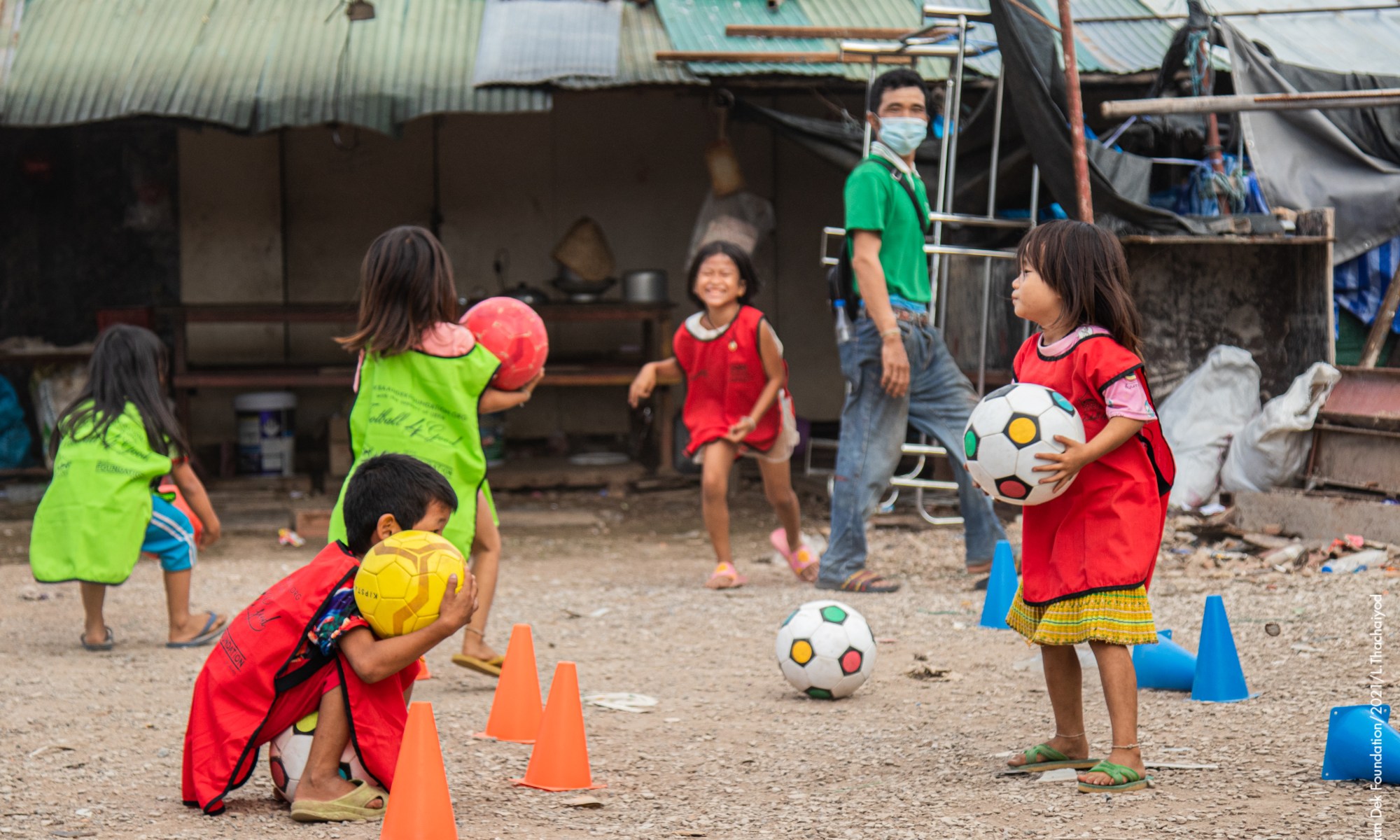
Tens of thousands of migrant children live in construction site camps throughout Thailand. The Baan Dek Foundation (BDF) supports over 1,650 of these children each year. The children live in slum-like conditions and face difficulties accessing healthcare and education systems. In addition, they have few opportunities to engage socially and connect with their peers, and the restrictions required in Thailand during the COVID-19 pandemic have left them even more isolated.

Project content

The Football4Good (F4G) project supports children and teenagers living in construction site camps, reaching 600+ children per year through sport sand youth empowerment activities to provide positive social opportunities and physical and mental benefits, promote gender equality, and facilitate integration by teaching youngsters life skills, respect and sporting values.

Objectives

  • Access to sport: F4G provides football sessions and matches, sports equipment and improvements to community.
  • Youth empowerment: Young people are trained as youth peer educators (YPEs), so that they can run football sessions and act as role.
  • Social and life skills: F4G presents an inclusive avenue for children to play an active role in community life and teaches them life.
  • Gender equality: F4G promotes gender equality in sport by eliminating barriers and preventing.

Project activities

  • Monthly after-school football sessions in priority construction site camp communities.
  • Weekly after-school football sessions in schools and a government institution.
  • Quarterly inter-community football matches.
  • 8 youth leadership training / refresher sessions for YPEs.
  • Monthly YPE follow-up meetings with BDF staff.
  • YPEs attend a professional football match with BDF staff.
  • Improvements to community sports spaces.
  • Sports equipment donated to communities.

Expected results

  • 120 F4G sessions delivered.
  • 500 children encouraged to play football.
  • 200 girls encouraged to play football.
  • 5 communities where sports facilities will be improved.
  • 300 people benefiting from improved facilities.
  • 40 YPEs receiving training/refresher courses.
  • 25 YPE follow-up meetings.
  • 4 inter-community matches.

Partner

Empowering children from La Matanza through sport, culture and education

Location and general information

Closed
Location Argentine, Buenos Aires
Start date 02/28/2022
End date 02/28/2023
Cost of the project €47,645
Foundation funding €10,000
Project identifier 20210704
Partners United Through Sport Argentina
Categories Access to Sport - Children with disabilities - Employability - Gender Equality - Infrastructure and equipment - Personal development
Context

La Matanza, 25km south-west of Buenos Aires, is a severely disadvantaged area where poverty levels are higher than the 60% national average. There are also high rates of drug use and related violence, poor infrastructure (access to water, electricity and rubbish disposal), malnutrition and little access to healthcare services.

Project content

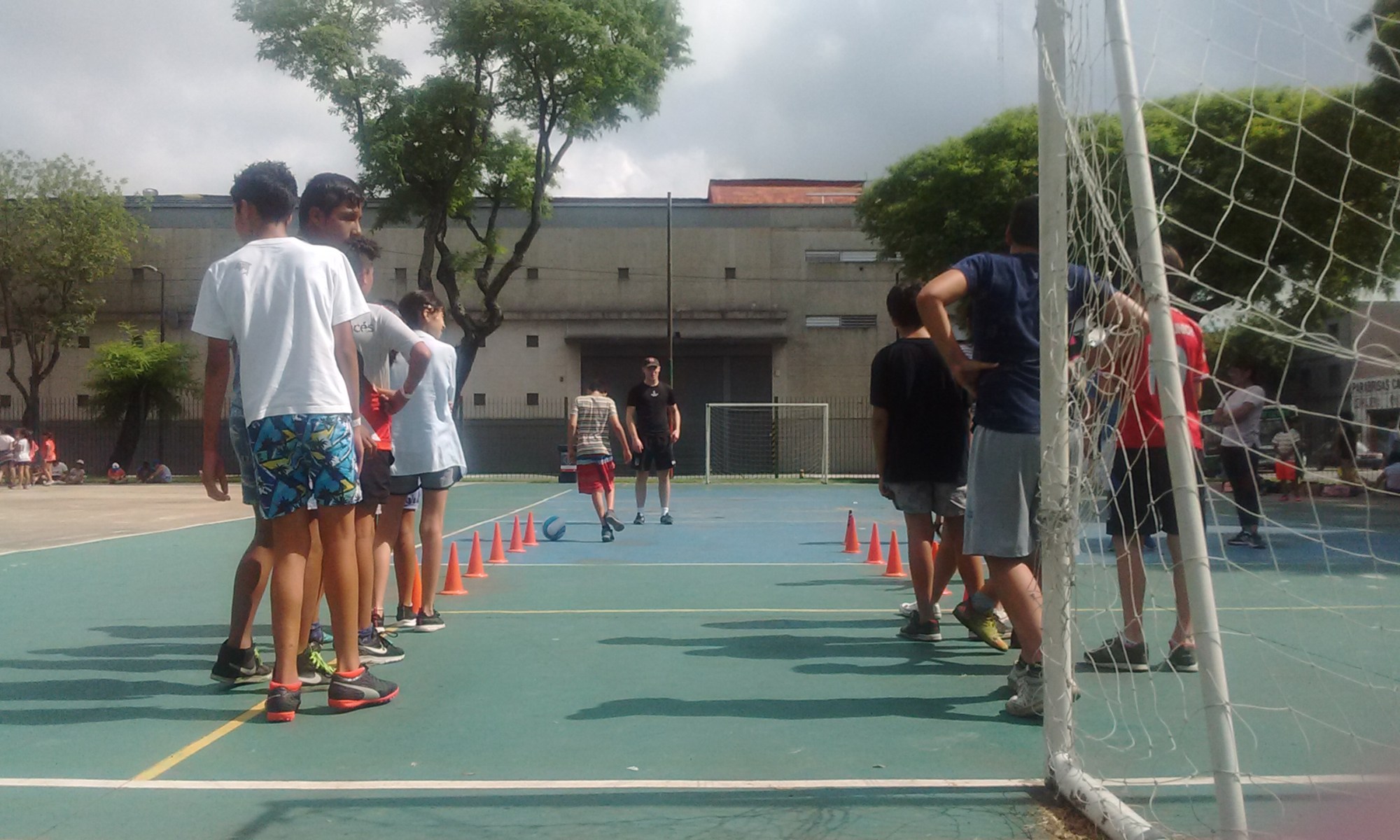
The mass participation programme consists of a combination of sports coaching and life-skill lessons. It is currently run daily in four public schools in the city of Buenos Aires. We aim to expand into schools in La Matanza to increase the reach and impact of our work. The programme consists of structured sports coaching, e.g. football, rugby and field hockey, in combination with life-skill sessions on cultural exchange, sustainability, individual and community well-being and gender issues. The sessions will be led by local staff and supported by international volunteers.

Objectives

  • Use our combined sports and life-skill coaching model to improve physical and mental well-being and to develop and sustain life skills (teamwork, leadership, decision-making and communication).
  • Use sport to improve educational engagement and provide pathways to success for talented and dedicated individuals.
  • Develop and establish our sport and life-skill model and methodology for further expansion.

Specific objectives:

  • Partner with at least three more schools to add another 2,000 children and teenagers to the programme
  • Provide workshops for 2,000 children and teenagers and achieve an average academic improvement of 15% per child, as in our programmes in Buenos Aires, and also achieve a 5% improvement in academic attendance per child
  • Use sport to address critical issues, such as crime and drug awareness, in a fun and interactive manner on the sports field

Project activities

January–February 2022 Contact new schools and local authorities to explain and develop the programme

February–March 2022 Purchase private mini-bus

March-April 2022 Hire new staff to work alongside PE teacher in local schools

March–April 2022 Design and coordinate sports and teaching curriculum after consultations with local staff

April 2022 Submit deliverables (curriculum)

May 2022 Programme starts

July 2022 Winter games event

August 2022 - September Interim report and assessments submitted

December 2022 Programme graduation ceremony

February 2023 Final report submitted

Expected results

  • Partnering with at least three and a target of four schools in La Matanza
  • Enrol at least 1,500 and a target of 2,500 youngsters
  • Achieve an average increase of at least 15%, target 25%, in participants’ academic grades
  • Achieve an average increase of at least 5%, target 10%, in participants’ academic attendance

Partner

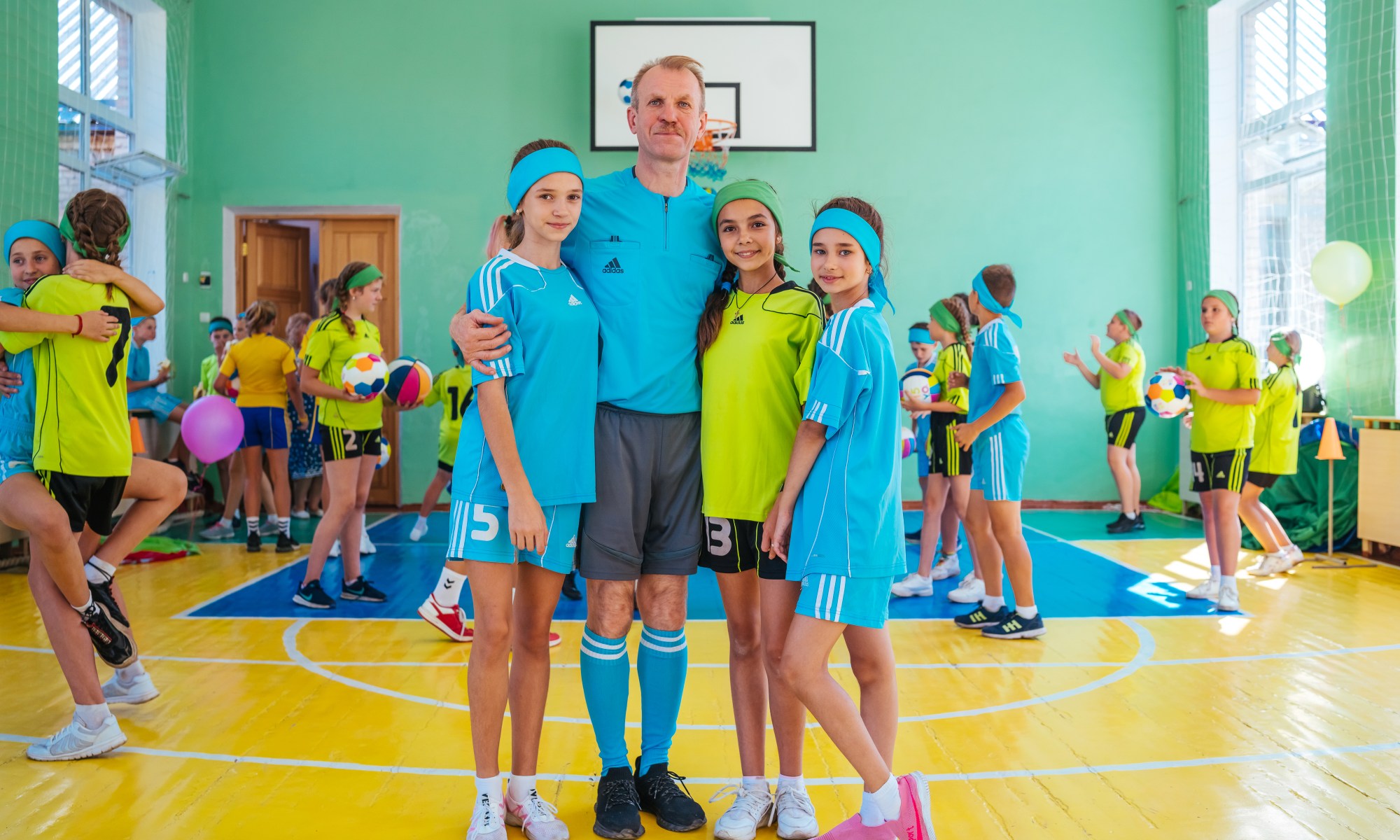
Play for Equality

Location and general information

Closed
Location Ukraine
Start date 01/17/2022
End date 12/31/2022
Cost of the project €120,000
Foundation funding €80,000
Project identifier 20210597
Partners Klitschko Foundation
Categories Access to Sport - Gender Equality - Infrastructure and equipment - Personal development

Context

A disappointing trend can be observed in Ukraine – girls do less sport than boys. According to a ministry of finance report, women make up only 25% of those who play sports. In Ukraine, an average of 20,000 boys attend sports schools, as opposed to only 6,000 girls (Lviv State University of Physical Culture, 2012). This discrepancy is caused by the many stereotypes that girls face when they want to play sports. It is necessary to convey the value of sport to the younger generation of girls and debunk stereotypes about women's sports.

Project content

Play for Equality is a project for physical education teachers designed to increase the involvement of girls in sport. Our main message is to communicate the accessibility of sport for girls and motivate them to get involved. During the project, we want to debunk stereotypes about women's sport and engage PE teachers and teenage girls in discussions about self-determination, the need to fight bullying and stereotypes and the importance of women's leadership, equal access to sport, sports physiology and motivation.

Objectives

The mission is to interest teenage girls in sports and physical activity in general, and to develop women's leadership.

Our objectives are:

  • Debunk stereotypes that suggest some types of sport are ‘not for women’;
  • Motivate girls to play sports and lead an active lifestyle;
  • Educate PE teachers on gender issues in schools;
  • Bring about positive changes in society by promoting sports activities;
  • Create permanent centres for the development of women's sports.


Project activities

  • Provide a 10-day online (or offline, if possible) training programme for 100 PE teachers;
  • Deliver sports equipment to 100 schools;
  • Create a five-minute educational video about gender inequality in sport for use throughout Ukraine;
  • Create 100 permanent football teams for girls in schools for a period of at least 6 months;
  • Organise a four-day camp for 10 representatives and trainers from football teams:

Expected results

  • 100 permanent football teams created for at least 1,000 teenage girls;
  • 100 schools provided with equipment for safe football lessons and help them organise football teams;
  • 240 girls involved in a football tournament and training about women's leadership, gender equality, healthy living, and other related topics;
  • 100 PE teachers involved in educational training;
  • 1 educational video on women's sports and debunking associated stereotypes.

Partner

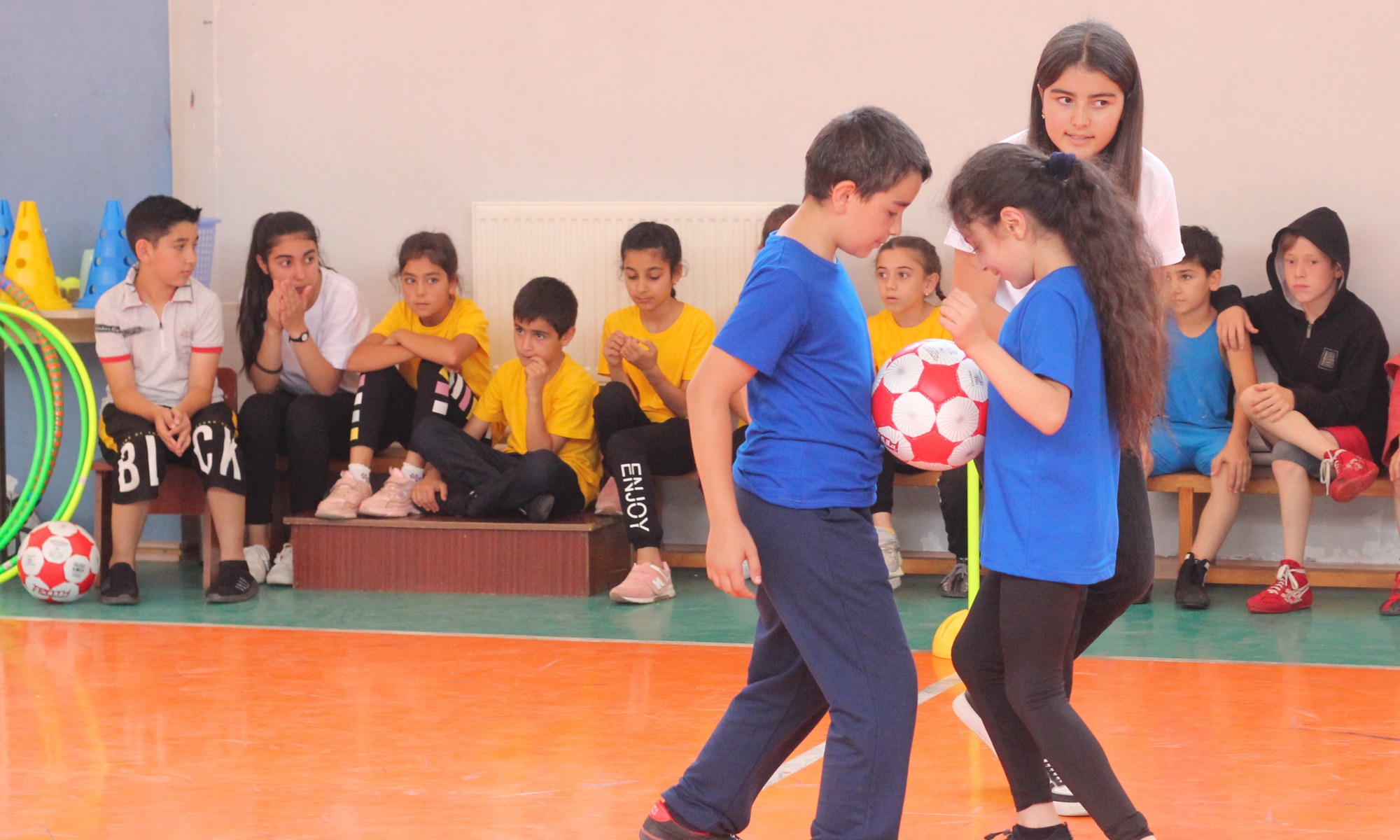
Generation Sport 2022

Location and general information

Ongoing
Location Armenia
Start date 01/01/2022
End date 12/31/2022
Cost of the project €64,086
Foundation funding €55,162
Project identifier 20210723
Partners Armenian Fund for Sustainable Development
Categories Access to Sport - Children with disabilities - Conflict victims - Infrastructure and equipment - Personal development
Context

This project is a follow-up to Generation Sport in 2021, which was a huge success throughout the country. In August 2021, Armenia had 1,403 schools with 368,184 pupils: 175,359 girls and 192,825 boys.

The lack of suitable equipment and the bad state of repair of the sports facilities hamper the PE classes that the children enjoy so much.

The armed conflict in 2020 took its toll on the children, who now need positive, fun experiences.

Project content

The project will promote sport among young people and encourage physical eduction throughout the country. Twenty-five schools will be selected to receive sports equipment. Events will be organised to promote sport and exercise among the school-age population. Organised meet-and-greets with sports personalities will motivate the youngsters and encourage them to fulfil their potential. The project will help promote the inclusion of disabled children in sporting activities.

Objectives

Overall objective: Promote sport and exercise among young people

Specific objective: Motivate the children and help them to fulfil their potential through the following activities:

  • Providing sports equipment for 25 schools, prioritising schools in remote regions and those with disabled pupils
  • Promoting the inclusion of disabled children through sport
  • Involving the ministry of education, science, culture and sport in organising sports competitions
  • Organising sports events

Project activities

Applications and selection

  • Launch, jury, school selection
  • Equipment purchases
  • Distribution to schools

Sports events

  • Meet-and-greets with sports celebrities
  • Promote the inclusion of disabled children
  • Sports events in schools

National school football competition

  • Promote sport
  • Award prizes

Expected results

  • At least 150 schools (over 40,000 pupils) apply for sports equipment
  • 25 schools (over 7,500 pupils) receive equipment
  • At least 10 motivational meet-and-greets, involving 1,000 youngsters
  • At least 4 sporting inclusion events, involving 200 youngsters
  • 300 brochures on the importance of sport distributed
  • 300 sports awareness posters distributed to schools

Partner

Live together II

Location and general information

Closed
Location Türkiye and Syria
Start date 01/01/2022
End date 10/30/2022
Cost of the project €200,000
Foundation funding €200,000
Project identifier 20210900
Partners Bonyan Organization for Youth and Development
Categories Access to Sport - Children with disabilities - Conflict victims - Gender Equality - Infrastructure and equipment - Personal development
Context

The Syrian refugee crisis remains the largest humanitarian and development crisis in the world. Across the five main Syrian-refugee hosting countries, over 10 million people need some form of humanitarian and resilience support, the highest number in nearly a decade. This includes 5.5 million Syrian refugees and 4.8 million impacted host community members.

The key underlying issues are large-scale protracted displacement, socio-economic conditions, COVID-19 and demographic pressures. Türkiye currently hosts approximately 3.6 million refugees, the majority of whom live out-of-camp, integrated into host (Turkish) communities in cities and villages. Both communities therefore share the same environment and resources.

Project content

The Live Together II project is a continuation of the 2019 Live Together project. Work will be done in schools to disseminate and mainstream football3 culture among teachers, who in turn will pass it on to the children. Capacity-building courses will be held, playgrounds rehabilitated and brochures, guidebooks and sports supplies distributed.

Children with special needs will also be included in the sports activities. Girls’ and boys’ football teams will be set up to involve girls in sports activities, with the hope that this will lead to wider inclusion of girls within the community. The project volunteers will receive training on child protection principles, awareness of child protection issues, the promotion of children’s rights and health tips to prevent the spread of COVID-19.

Objectives

The project’s overall goal is to use football as a tool for building peaceful coexistence, as well as to improve the sports infrastructure in schools in the border towns of Akçakale in Türkiye and Tal Abyad in Syria.

Project activities

  • Playground rehabilitation: Playgrounds in five schools – in each country - will be rehabilitated so that children attending and living near the school can play sports, which will improve their life skills and promote peaceful coexistence.
  • Teacher capacity-building: The teacher training programme will last four days and focus on mainstreaming the football3 methodology as well as other social cohesion activities that can be integrated into classwork.
  • Capacity-building for youth mediators: Youth mediators will volunteer as coaches in the football3 leagues. They will prepare and facilitate the football3 sessions, mediate any conflicts arising between the teams and act as positive role models for the children.
  • Running football3 leagues: Football3 leagues will be set up: one in Türkiye and one in Syria. All teams will include both Turkish and Syrian children. Children will play in a safe environment where they will have fun, learn life skills and build their resilience. The volunteer coaches will discuss well-being with the children to provide them with psychosocial support.

Expected results

  • Playgrounds will be rehabilitated in five schools in Türkiye and Syria.
  • 100 teachers will be provided with training on football3 and sports for children.
  • 240 children will take part in football3 games in Türkiye and Syria.
  • 80 young people will play an active role in their communities and receive training on football3 methodology, leadership and conflict resolution.

Partner

Football in Rissani

Location and general information

Closed
Location Morocco, Rissani
Start date 01/01/2022
End date 12/31/2022
Cost of the project €60,000
Foundation funding €30,000
Project identifier 20210570
Partners Association Enfants du Désert
Categories Access to Sport - Gender Equality - Infrastructure and equipment

Context

The population of Rissani, a town in the Moroccan desert, has risen enormously over the past ten years; however, the town’s infrastructure has not kept pace. While there are some dynamic clubs that try to provide underprivileged youngsters with access to sport, the lack of funding and decent equipment means that they do not have the facilities they need. The Football in Rissani project was launched to overcome this issue and enable all youngsters, both girls and boys, to enjoy the advantages of sport.

Project content

The Football in Rissani project will build a dedicated sports area in two locations in the town, consisting of an enclosed football pitch, equipped changing rooms, toilets and running water. Playing equipment (balls, bibs, cones, etc.) will also also provided. The facilities will be built by a team of local builders that Enfants du Désert has been working with for 17 years.

Objectives

  • Give youngsters from underprivileged families access to sport.
  • Encourage boys and girls to mix while enabling girls to enjoy sport in a suitable, safe environment.
  • Provide extracurricular activities for young people.
  • Promote education through sport by exposing young people to values such as team spirit and tolerance while. promoting trust and self-confidence.
  • Support the activities of sports clubs.
  • Encourage socialisation among young people.

Project activities

  • Building infrastructure (pitches, changing rooms, toilets, enclosure).
  • Providing two local clubs with equipment.
  • Weekly training sessions in partnership with two local sports clubs.
  • Organising friendly tournaments and open days to encourage more youngsters to discover and take up sport.

Expected results

  • Reduced inequalities through extracurricular activities.
  • Reduction in inappropriate behaviour among teenagers due to their enthusiastic participation in the activities giving. them a sense of belonging and achievement.
  • More youngsters regularly taking part in local life and sport thanks to the new facilities.
  • More girls taking part in sport.

Partner

My time, my future

Location and general information

Terminé
Location Ecuador, Yacuambi
Start date 01/10/2022
End date 01/10/2023
Cost of the project €33,804
Foundation funding €33,804
Project identifier 20210800
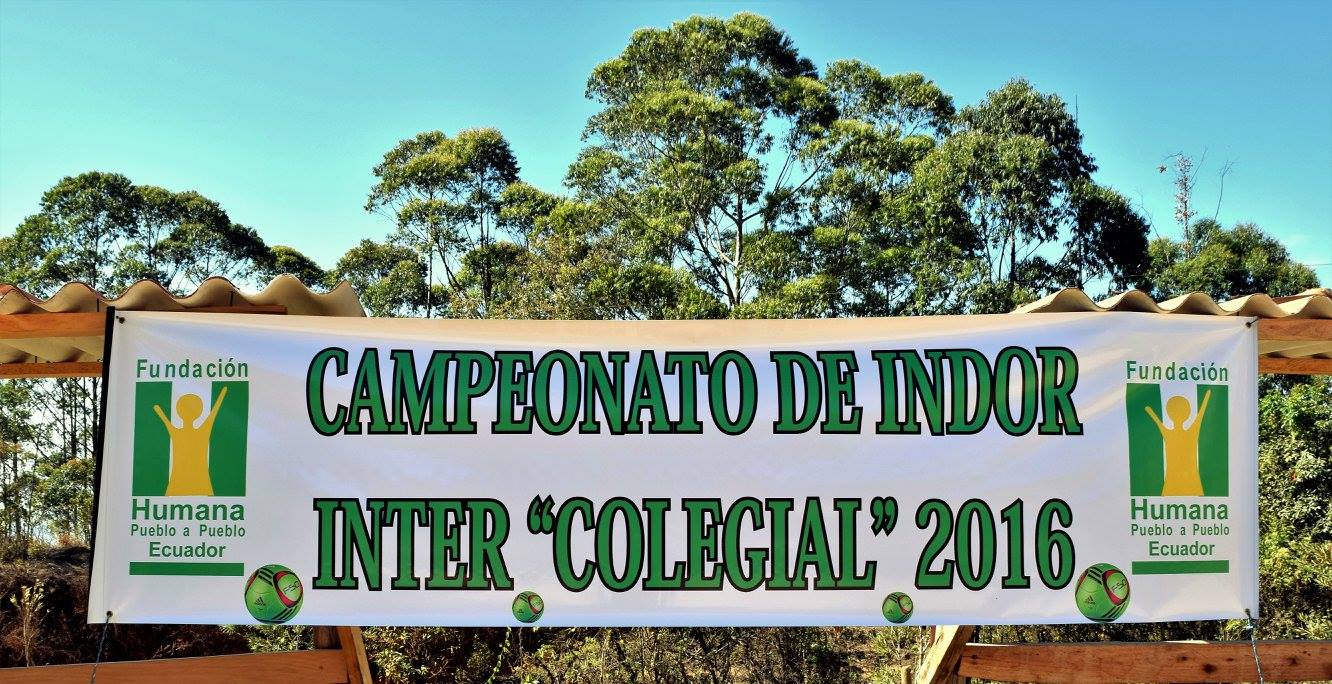
Partners Fundación Humana Pueblo a Pueblo
Categories Access to Sport - Gender Equality - Infrastructure and equipment - Personal development

Context

FHPP-E helps children and young people play an active role in society through cultural, sporting and educational activities. Children and young people in the Yacuambi municipality in the Ecuadorian Amazon do not have adequate recreational spaces to have fun and develop their motor skills, often leaving them exposed to drugs and child labour. Child labour has a negative impact on children’s cognitive, emotional and social development, affecting their quality of life and mental health, and leaving them vulnerable without the tools they need for the future.

Project content

Regularly playing a group sport has been shown to promote social development and good health, as well as build character, discipline, decision-making skills and rule compliance, benefiting all areas of daily life. To counteract the lack of emphasis placed on extracurricular activities at school, the project seeks to get local actors involved in developing sports and football training activities for children aged 8–18 in Yacuambi municipality. The aim of the project is to provide an environment that allows the children to develop both physically and psychologically, as well as improve their social skills.

Objectives

  • To develop the motor, sports and life skills of 100 children and teenagers through the promotion of education and physical activity as a universal right.
  • To promote the practice of football as an inclusive and effective tool in improving physical and mental health.

Project activities

  • Technical and tactical football training and practical and audiovisual workshops.
  • Training in leadership, self-esteem, values, conflict resolution, a culture of peace and teamwork.
  • Creation of murals on caring for the environment and the rights of children and teenagers.
  • Improvement of sports spaces through community action.
  • Selection of the best participants through micro-cycles.
  • Technical and tactical macrocycles and physical preparation.
  • Organising and participating in local (intercommunity), national (indigenous league) and international (binational Ecuador-Peru tournament) tournaments.

Expected results

  • At least 80% of the children are technically, physically and tactically trained in football.
  • At least 80% of the children are trained in leadership, self-esteem, values, conflict resolution, a culture of peace and teamwork.
  • At least 60% of the children participate in creating murals about the environment and children’s rights.
  • At least 80% of the children participate in physical activities and education.
  • At least 40% of the children are selected for teams.
  • At least 60% of the children participate in technical and tactical macrocycles, physical preparation and goalkeeping.
  • At least 40% of the children participate in local, national and international tournaments.
  • 100% of the children participate in the opening and closing events of the project.


Partner

Lay’s RePlay

Location and general information

Ongoing
Location UK, South Africa, Brazil, Italy, USA, Mexico, Türkiye and Egypt
Start date 01/01/2021
End date 12/31/2023
Cost of the project €tbc
Foundation funding €200,000
Project identifier 20200100
Partners Lay’s, Common Goal
Categories Access to Sport - Infrastructure and equipment - Personal development - Sponsors

Context

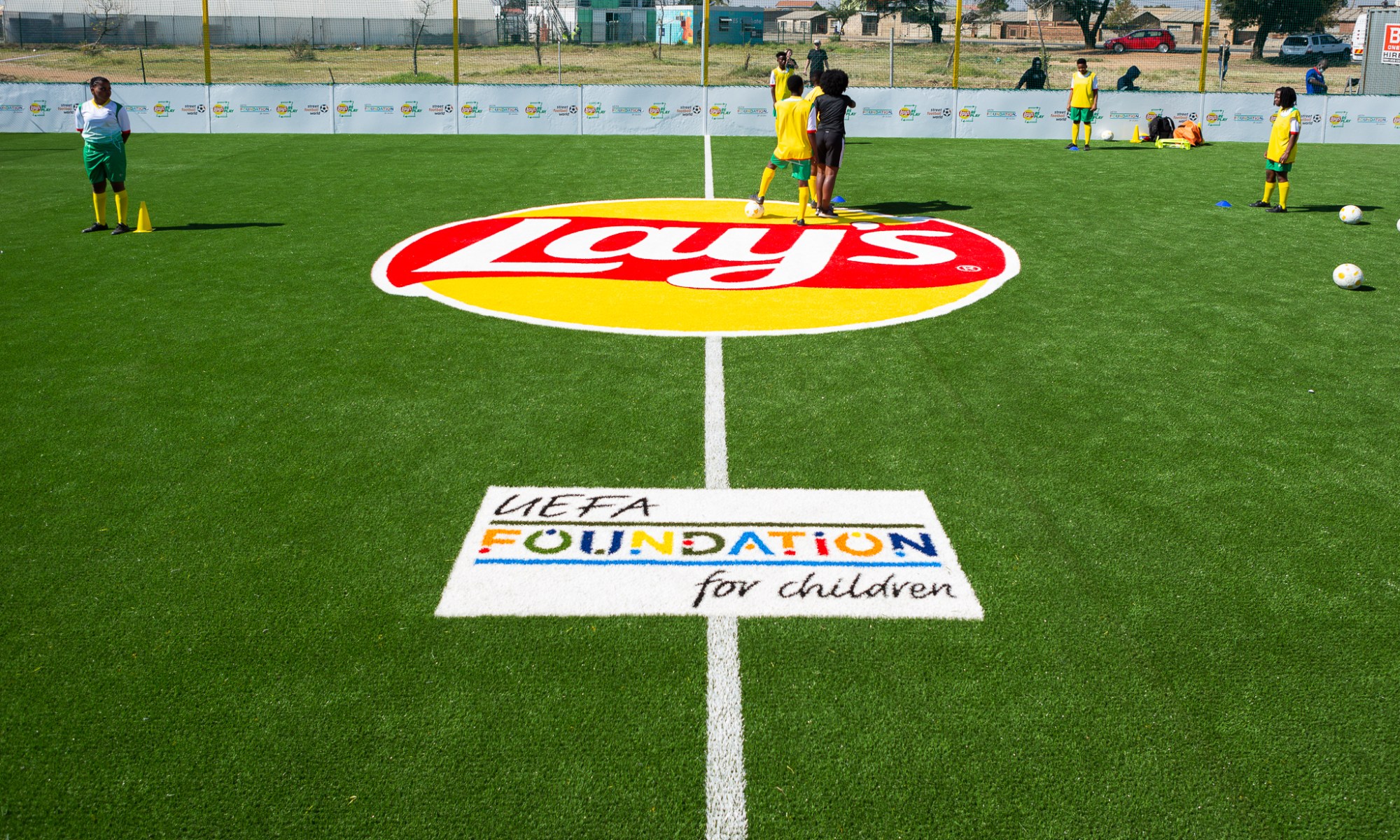
Lay's RePlay – an innovative global initiative in partnership with the UEFA Foundation for Children and streetfootballworld – aims to bring joy to communities around the world by transforming empty crisp packets into sustainable football pitches, leading to positive outcomes for people and the planet.

Eleven community mini pitches composed partially of reused empty crisp packets have been constructed in:

  • Tembisa, South Africa
  • Leicester, UK
  • São Paulo, Brazil
  • Turin, Italy
  • Iztapalapa, Mexico
  • Santa Ana, USA
  • Gaziantep, Türkiye
  • Cairo, Egypt
  • Naples, Italy
  • Santa Marta, Colombia
  • Bilbao, Spain


Tapping into the global passion for football, these pitches will become sustainable hubs for

positive community transformation.

Project content

Lay’s RePlay provides artificial five-a-side pitches that are ideal for communities with limited access to spaces where they can enjoy the game and develop their skills.

It works with local partners to build spaces and programmes that bring people together and drive positive change for generations to come – it’s much more than just a pitch.

The project’s long-term educational sporting programmes harness the positive power of play and football to address social issues impacting local communities through their four key aims: creating a sense of belonging, increasing engagement, fostering safety, and granting access to sport.


Objectives

Lay's RePlay places a strong emphasis on including community members and local organisations throughout the planning, construction and maintenance of each pitch, with a view to developing programmes that can address the specific social issues affecting each community while also fostering safe access to sport. Each pitch is constructed using partially recycled material and the aim is to deliver them with a net-zero carbon footprint.

Project activities

Multiple stakeholders are involved in creating the mini pitches, each of which takes an average of 8 to 12 months to complete. The local partner in each location will lead the process, in close collaboration with streetfootballworld.

Community engagement will be integral; the community is seen not as a recipient, but as part of the decision-making process. It is a participatory project, with an emphasis on talking to community stakeholders, understanding their needs, appreciating their contexts, and collaborating to find optimal solutions. The community is involved in the project before, during and after construction, and preference is given to local sources to ensure capacity development and build trust.

Expected results

  • Eight community football pitches will have been created by the end of 2022.
  • Recycled crisp packets constitute 32% of the material used to construct the pitches, and each community will become more aware of sustainable practices.
  • The artificial turf and the substrate on which it rests (Ecocept™) are 100% recyclable, thanks to the compression of recycled plastic.
  • Local communities in all locations are closely involved in the process.
  • Girls and boys have equal access to a space to play football.
  • Educational sporting programmes provide tailor-made support to the local community and drive positive change for generations to come.


First results in the UK, South Africa, Brazil and Italy

  • Local organisations have organised football and other sports sessions as well as educational initiatives to combat the social challenges faced by their communities. Themes tackled include female participation, physical and mental health, education and drugs.
  • Members of the community benefit from a new football pitch that remains open outside of the organised sessions.

Partners

Kurt Landauer Platz

Location and general information

Closed
Location Münich, Germany
Start date 01/01/2021
End date 12/31/2021
Cost of the project €666,258
Foundation funding €128,000
Project identifier 20200881
Partners Bellevue di Monaco
Categories Access to Sport - Infrastructure and equipment - Personal development

Context

Sport plays a key role in the integration of young refugees into society, with many studies showing that sports programmes can help to strengthen links between migrants and the native population. In Munich, local authorities and NGOs have made considerable efforts to accommodate asylum seekers over the last six years. However, there is a lack of sports programmes, and space for sporting activities is very limited (especially in the city centre). As a result, young refugees have not had enough opportunities to play sport and mix with locals of the same age.

Project content

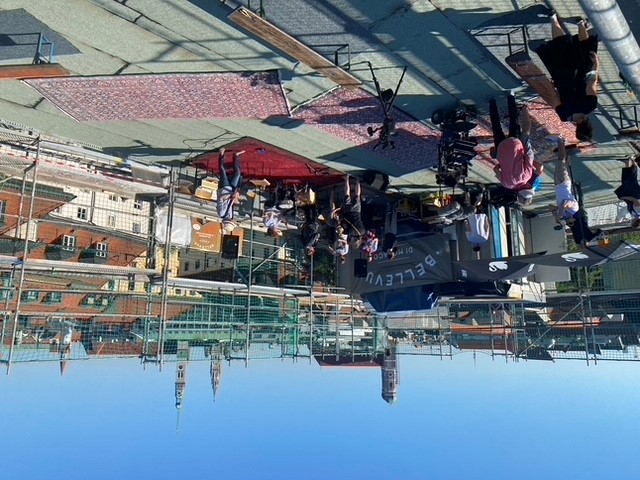
A multi-sports pitch (named after Kurt Landauer, a former president of FC Bayern München) has been built on the roof of the Bellevue di Monaco intercultural community centre in the heart of Munich. Working in cooperation with its partner Bunt kickt gut, the community centre plans to use that venue to offer a variety of sports programmes (football, basketball, gym sessions, etc.) for young refugees and local children from the neighbourhood (boys and girls alike), with a focus on cultural exchange, personal development and inclusion.

Objectives

The project’s main aim is to foster cultural exchange between young refugees and local children, based on a firm belief that sport is the best way to bring people together and establish bonds. Particular attention will be paid to the issue of gender equality: girls and boys will play together on the pitch, but there will also be special programmes dedicated solely to girls. The activities will focus primarily on sports, but the coaching methodology will also help to strengthen children’s language skills, interpersonal skills and, in some cases, even vocational skills.

Project activities

  • Recruit staff to manage the multi-sports pitch, allocate time slots, supervise training sessions, coach participants and resolve conflicts.
  • Establish sports programmes for young refugees and local children.
  • Organise a variety of sports activities and coaching sessions, fostering personal and professional development.
  • Organise football tournaments and other special sports events on a regular basis.

Expected results

  • It is expected for around 1,200 young refugees and local children to regularly participate in the various sports programmes each year.
  • Refugees at the community centre will get to know more people in the local area.
  • Girls and young women who do not want to play sport in public will have access to special sessions and a protected space on the rooftop.
  • Participants will benefit from personal development (e.g. learning how to manage their frustrations).

Partner