Location and general information
Context
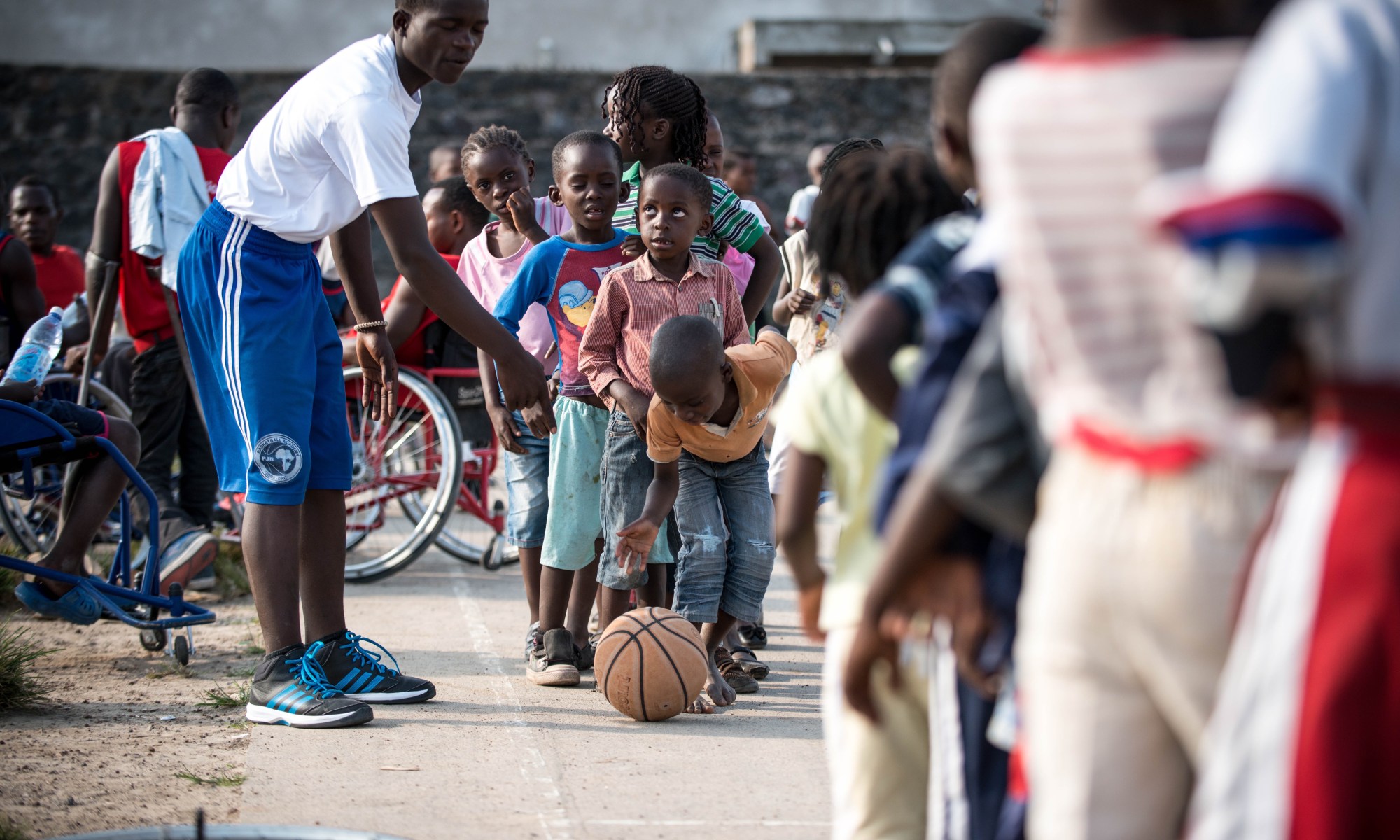
More than 25 years of international and domestic insecurity and violence in the Democratic Republic of the Congo has left very few prospects for youth development. As a consequence of this long period of instability, the population is facing health issues such as drug and alcohol abuse, malnutrition and communicable disease transmission. In this context, Promo Jeune Basket (PJB), a locally run grassroots organisation based in Goma, focuses on educating youth through basketball. PJB aims to empower youth to overcome their difficult situations by using sport as a tool for health promotion, peace and education by requiring all participants to attend school.
The UEFA Foundation for Children is supporting the Life Skills Curriculum Project. This programme will encourage young people to focus on their future, avoid risk behaviours and engage in the world with a global perspective. The course will include a range of topics, including personal health and hygiene, the importance of education, goal setting, and non-violent communication.
This project will run in tandem with the existing programmes of the organisation: basketball training that uses sport to instil the values of hard work, team spirit, discipline and respect; and the provision of school scholarships for players who exemplify these values on the court and in the community.
Project Content
Life Skills Curriculum Project is a course tailored to the needs and aspirations of the community. These lessons provide young people with a chance to learn about personal health, practice non-violent conflict resolution, increase their ability to work with others and allow a safe, open space for dialogue about the challenges they encounter in their community. These objectives are met through the five components of the course:
- Personal development – focus on health, hygiene and self-confidence
- Collaboration and cooperation – focus on conflict resolution
- Interpersonal communication – focus on processing and expressing emotions, as well as on public speaking
- Professional development – focus on goal-setting, time management and leadership development
- Problem-solving and critical thinking – focus on dialogue around community issues such as poverty, insecurity, domestic and sexual abuse, and peer pressure
Objectives
- Deliver the life skills curriculum to PJB players aged 14 and older. These youngster will develop personally and professionally, learn strategies for facilitating non-violent conflict resolution, collaborate with others and practise critical thinking.
- Train 15 young leaders (university and upper secondary students) to teach and deliver life skills lessons on and off the court.
- Offer the life skills curriculum to over 1,200 young people in the city of Goma.
- Create a media programme to promote the life skills programme and reach a larger number of young people in the city.
Expected impact and results
-
- The personal development classes increase young people’s confidence and leadership skills.
- The communication lessons prepare young people to facilitate non-violent communication and make them fluent in peace strategies.
- The professional development lessons prepare young people to succeed both academically and professionally.
- The collaboration and cooperation lessons improve young people’s ability to work in diverse groups.
- The problem-solving units cultivate critical-thinking skills as well as open dialogue for talking about difficult issues such as poverty and insecurity. The ultimate result of the life skills programme is that young people are helped to become active citizen leaders in their community.
Partners

Location and General Information
Context
According to the United Nations, Benin, Cameroon and Togo are some of the world’s poorest countries, ranked 166th, 153rd and 162nd respectively out of 188 in terms of human development. None of them have an average life expectancy of more than 57 years; children spend an average of less than six years at school (less than four in Benin); less than a third of children go on to secondary or higher education; and both women and girls are marginalised when it comes to sport.
This project forms part of an educational programme outside of school which uses games, sport, books and modern IT in order to provide teaching, pursue preventive and educational goals, and achieve a comprehensive range of development objectives in deprived areas of developing countries, establishing libraries of books and games, sports academies promoting team sports, dedicated IT areas, etc.
Project content
This project uses the power of football – and sport in general – to foster the development of deprived children in all respects and improve their life chances. The funding that the UEFA Foundation for Children provides will allow the project to:
- build and equip multi-sport pitches in the heart of deprived areas of the three countries;
- purchase sports equipment for handball, basketball, football and volleyball;
- train young local sports coaches;
- organise a sports academy offering four hours of coaching a week for each sport (i.e. a total of 16 hours a week across the four sports);
- organise a promotional tournament;
- bring organisers from the three countries together to exchange ideas;
- establish monitoring, oversight, support and assessment mechanisms.
Objectives
- Foster personal development and self-confidence, preparing children for the future and helping them to escape poverty
- Help teachers/instructors to organise high-quality educational initiatives through sport with a view to fostering all aspects of development
- Help to improve the physical and mental well-being of young children and adolescents in deprived areas by giving them the opportunity to play four team sports (football, handball, volleyball and basketball) in a high-quality environment
- Teach children sporting values such as respect, sharing, solidarity, humility, perseverance, discipline and team spirit
- Promote universal access to team sports through regular sessions overseen by trained local coaches from the same social class as the children
- Foster exchanges of ideas/experiences and networking among the young sports coaches with a view to effecting lasting change through sport
Expected results
In order to ensure that these sports are played in appropriate conditions, help participants to really develop their sports skills and learn the positive civic values embodied by sport, and encourage children to adopt behavioural patterns that reflect the project’s educational objectives, a maximum of 30 participants will be able to sign up for each of the four sports (handball, volleyball, football and basketball) in each semester – i.e. each country will have a limit of 240 children per year (resulting in a grand total of 720 beneficiaries per year). This should allow the following objectives to be achieved:
- Develop new educational activities in these deprived areas
- Facilitate team sports through the construction of pitches
- Recruit young coaches (men and women) to work with local children
- Offer sustainable and structured sporting activities throughout the year
- Foster positive values such as respect, sharing, solidarity, discipline and team spirit
- Increase participation among girls and stimulate the local community
- Tackle inactivity
Partners

LOCATION AND GENERAL INFORMATION
Our aim
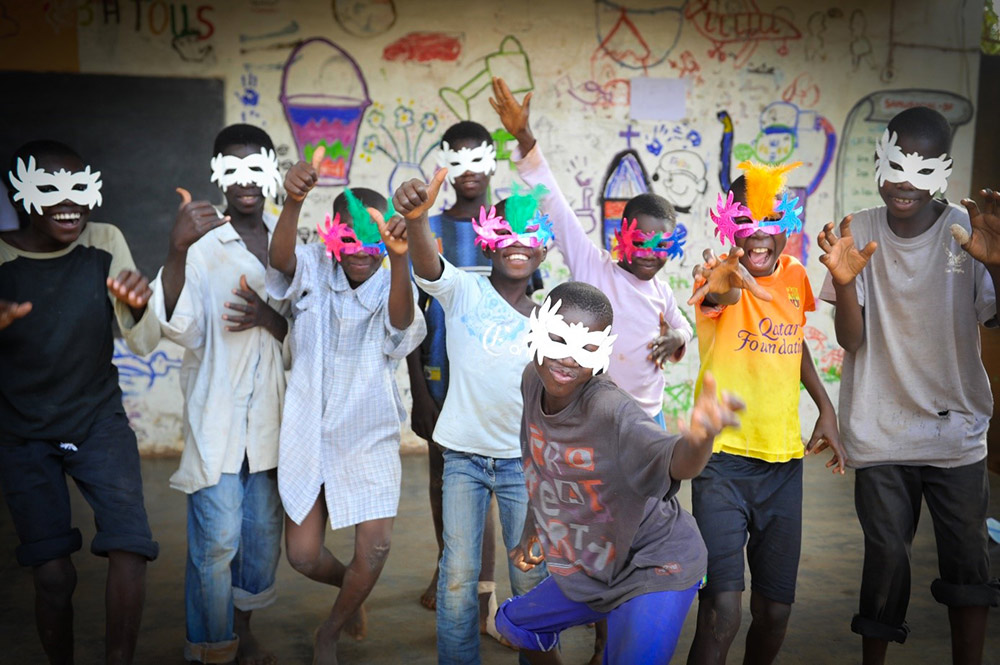
Samusocial Burkina Faso (SSBF) is a Burkinabe association that was created 13 years ago with the support of Samusocial International. Its mission is to contribute to the fight against social exclusion of street children in Ouagadougou. Since it was created, the SSBF has developed various services, including mobile teams carrying out street rounds, an emergency shelter and a day care center. It also supports its partners in order to build and strengthen a continuum of care, including assisting street children and young people in their plans to leave the street.
PROJECT CONTENT
Continuous assistance for street children in Burkina Faso
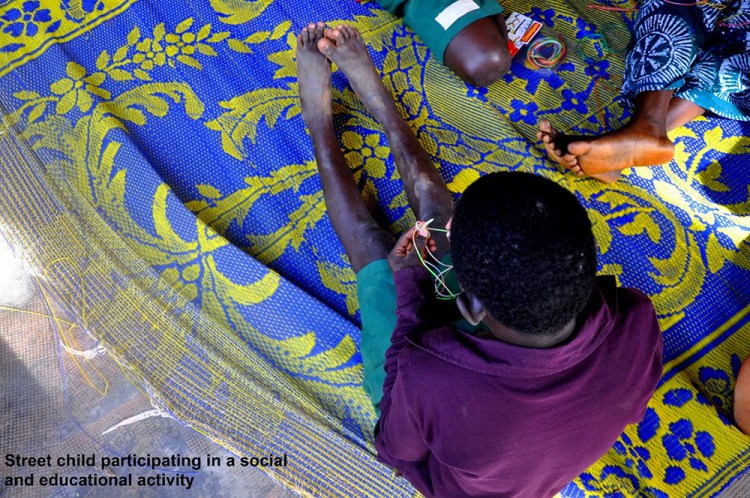
The objective of this programme is to fight against social exclusion in Burkina Faso by improving the situation of children and young people at risk living on the streets of Ouagadougou and supporting their projects to leave the street.
Specific objectives:
- To give them access to professional emergency services tailored to their specific needs, 7/7;
- To detect, prevent and respond to physical and psychological abuse they suffer;
- To provide them with support for their ‘off the street’ projects, through family tracing and/or directing them towards reintegration programmes managed by public services or partner associations;
- To inform and mobilise civil society and public authorities on the phenomenon of street children so that great attention is given to this problem in their actions.
Samusocial activities at the centre
The centre’s work is organised around several activities:
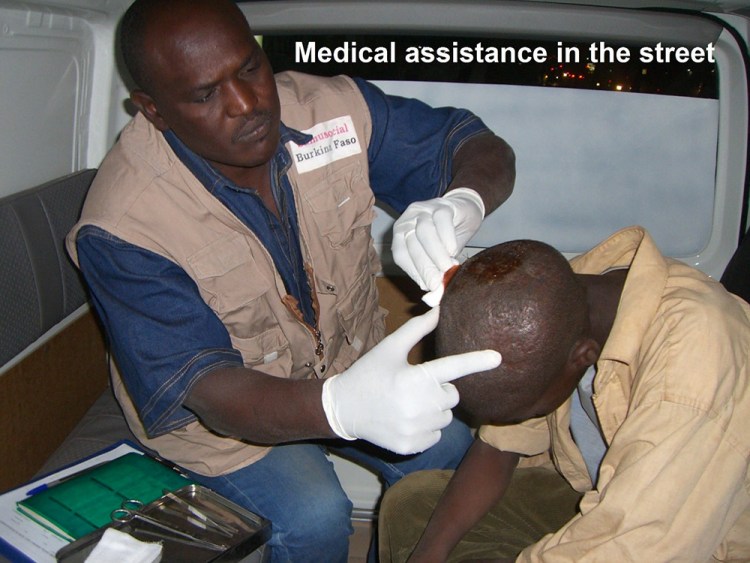
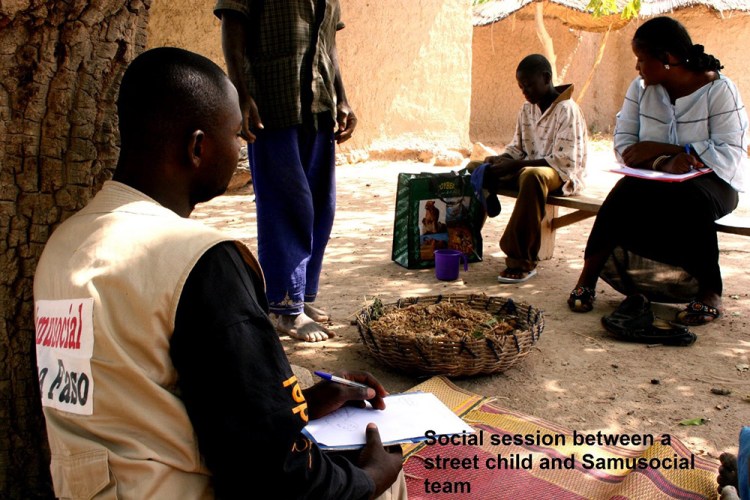
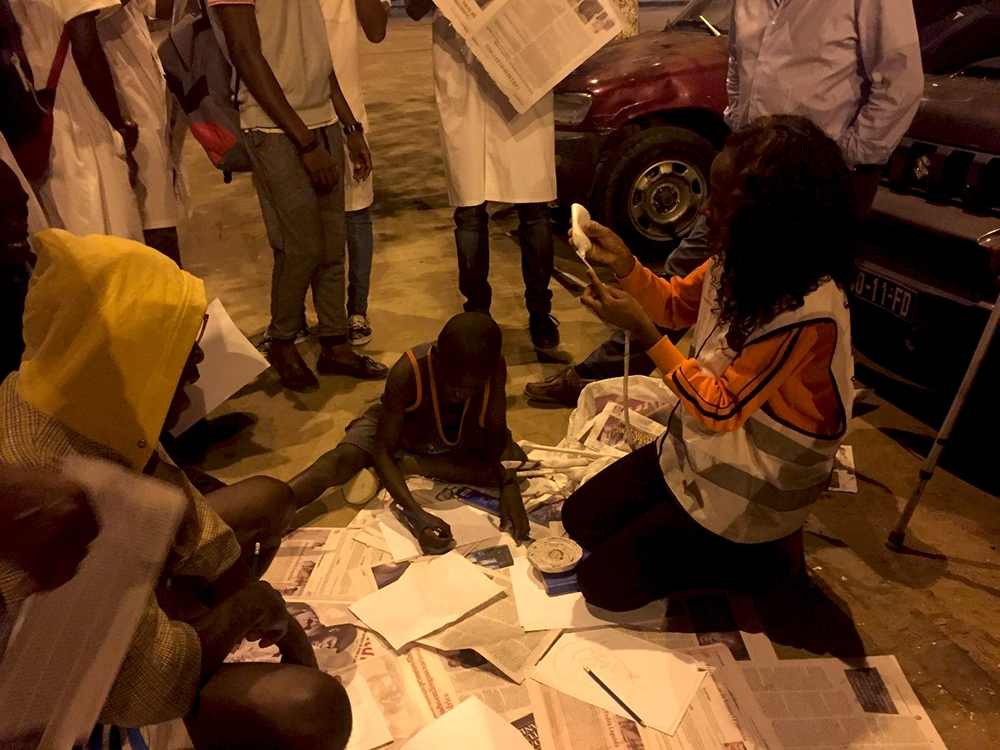
- Reaching out towards street children and offering them medical, psychological and social services in the street. Street rounds are organised every night on the streets of Ouagadougou, in specific areas where street children live, in order to offer them medical care and to listen to them, allowing them to reconnect with society, regain their self-confidence and consider their future.
- Offering immediate protection measures to the most vulnerable of street children by giving them access to the SSBF emergency shelter and/or day care services.
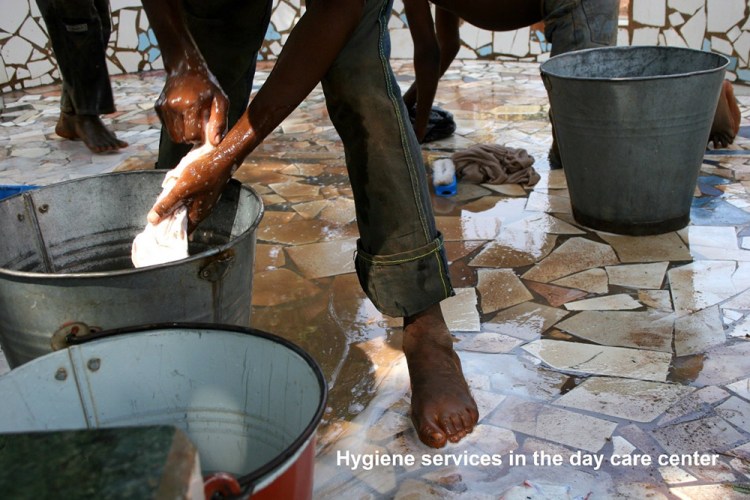
- Offering street children access to basic hygiene services and professional consultations (with doctors, social workers and psychologists) at the SSBF day care centre or through referral to partners’ services.
- Supporting street children in their projects to leave the street and/or to get back with their families. For children who are considering the possibility of reconnecting with their families and potentially returning home, Samusocial offers support and family mediation. For children who are willing to leave the street in other ways, Samusocial refers them to partners who are specialised in medium or long-term programmes (schooling, vocational training, etc.).
- Informing mobilising and including municipality services in activities for street children.
- Organising awareness activities for the general public.
Expected results
To protect and take care of street children and young people, each year giving:
- 900 children and young people access to medical, psychological and social care;
- 150 new children and young people contact with the mobile team;
- 150 children and young people access to the emergency shelter.
To support street children and young people in their projects to leave the street and/or to get back with their families, each year supporting:
- 70 children and young people in their projects to leave the street;
- 50 children and young people in their family tracing projects.
To inform and mobilise the general public about social exclusion of street children and young people, with each year:
- around 15 public and private stakeholders taking part in a cooperative and consultative group about street children and young people.
Links
samusocial International http://www.samu-social-international.com/fr/
samusocial Burkina Faso http://samusocialburkinafaso.org/
OUR PARTNERS
Location and general information
OUR AIM
Samusocial International in Angola helps promote an inclusive society by reinforcing actions and partnerships between civil society organisations and local authorities involved in caring for the most excluded children and adolescents.
Samusocial International has been present in Angola since 2010 and works with street children in partnership with the Angolan Association CACAJ (Arnold Janssen Children’s Centre). Since Samusocial International started its work there, over 300 street children have received specific medico-psychosocial support.
PROJECT CONTENT
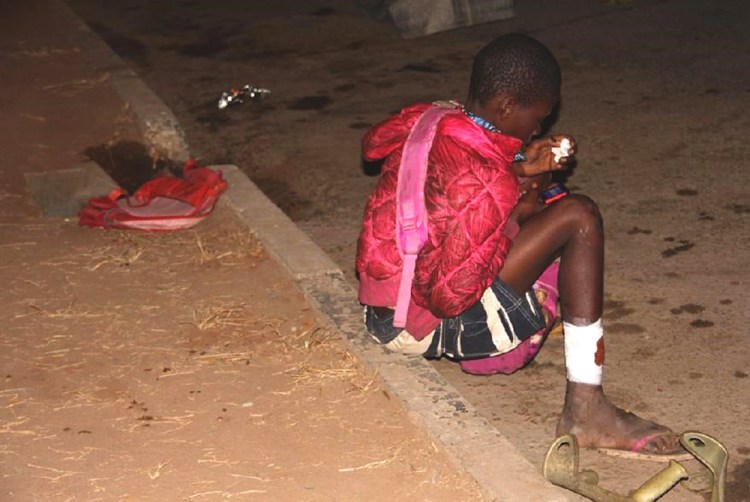
According to UNICEF, 5,000 children live on the streets of Luanda
The programme acts at three different levels:
- Improving access to basic services and quality of care provided to street children in Luanda, by assisting the Arnold Janssen Centre with technical means;
- Strengthening cooperation and networking between non-governmental actors and public institutions/local authorities involved in care and support to street children;
- Promoting street children’s rights by raising awareness of the living conditions of street children, spreading information and experiences between all entities involved in children’s care.
Samusocial International’s activities
To ensure that access to basic social services are improved for street children in Luanda, the following actions are envisaged:
- Medico-psychosocial support to vulnerable children by the mobile outreach team and by the Arnold Janssen Centre;
- Strengthening of Arnold Janssen Centre management with logistical, human resources and financial support;
- Supporting of the family reinsertion process in partnership with relevant local and national institutions.
Cooperation between professionals from different social entities for street children with local authorities will be strengthened through the following activities:
- Organising ongoing training sessions for the Arnold Janssen Centre teams;
- Organising ongoing training sessions for partner teams;
- Facilitating the exchange of best practices and cooperation between shelter facilities working with street children in Luanda and with local authorities. Organising and developing a network of state and non-state actors working in the social and family reintegration of children and young people.
Information and documentation about the status and rights of vulnerable children will be made available to public and civil society child protection actors through the following activities:
- Ensuring continual updating of documentation and data about street children;
- Developing technical guidance documents for the network professionals and organising information and knowledge sharing;
- Developing advocacy tools for the rights of the most excluded children.
Expected results
Access to basic social services are improved for street children in Luanda through improved technical capacities and means of the Arnold Janssen Centre:
- 400 street children benefit from medico-psychosocial support support during the two years of the project;
- 800 children a year receive individual care and social support;
- 20 street chidren benefit from family tracing each year;
- 120 children living at the Arnold Janssen Centre participate in educational, vocational and leisure activities.
Sharing and cooperation between professionals from different social facilities for street children along with local authorities will be implemented through training and experience-sharing sessions:
- 30 professional staff from the Arnold Janssen Centre and partners participate in training sessions, professional exchanges and networking.
Information and documentation about the status and rights of vulnerable children will be made available to public and civil society child protection actors:
- 40 professionals, decision-makers and public/private stakeholders working with steet children and/or vulnerable children get access to documentation about the situation of street children ad receive technical documentation and guidelines produced during the project;
- They participate in advocacy events involving street children organised at least once a year in Luanda.
Links
Samu Social International http://www.samu-social-international.com/en/
Samu Social International – Facebook https://www.facebook.com/ssiangola/timeline
Centro de Acolhimento de Crianças http://cacajluanda.org/
OUR PARTNERS


Location and general information
Context
The UEFA Foundation for Children will contribute towards the cost of an Ideas Box portable multimedia library and thereby allow the Franco-Senegalese association Future au Présent (FAP), which works with streetchildren in Zigninchor, to do more for the education of these children who do not go to school. The project will help 7,500 children, with a special emphasis on books for girls.
35% of under-15s work
Casamance is an area in the south of Senegal. It is one of the poorest parts of the country and, moreover, has been a zone of conflict between separatists and the Senegalese government since the 1980s. The instability of the region, the lack of infrastructure and the extreme poverty cause people to migrate to the main town of Ziguinchor.
Children are the first to suffer from this impoverishment. They stay away from school and end up working. Some, whose families have broken up, find themselves living on the streets. Girls are especially vulneable because they often work as servants, which can result in them being abused in the worst possible way.
Ideas Box – a way to reach out to marginalised children
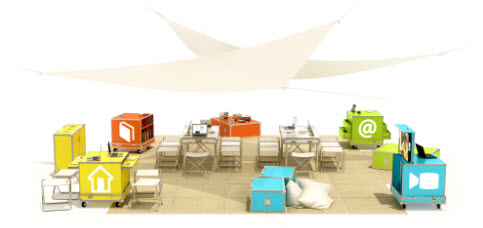
Libraries without Borders have created the Ideas Box, a portable multimedia kit that sits on two pallets and provides an area of 100m2 with an internet or 4G connection, computers, tablets, books and a cinema. It can be assembled in less than 20 minutes.
Aims and expected results
Project aim:
- To improve the integration and access to education of streetchildren and child workers in the Ziguinchor area of Senegal;
- To strengthen family ties and ties between the family and the school system.
Target groups and beneficiaries:
- streetchildren
- at-risk children and child workers
- vulnerable families and local schools
Expected results of the project:
- independence and social integration of children, girls in particular
- improved education thanks to access to books, reduction in illiteracy among children and young people, stronger resilience thanks to psychosocial support
- strengthening of family ties
- creation of ties between families and the school system
Our partners