

Sport in times of war – a lifeline for children
Carine N’koué, the UEFA Foundation’s general secretary, reflects on a recent UN Human Rights Council event in Geneva, where athletes and humanitarian organisations provided living proof of how sport can give hope to children affected by war.
Carine N’koué has spent more than a decade working with humanitarian sports programmes in Jordan, in particular the Zaatari Refugee Camp, close to the Syrian border. She has worked for the UEFA Foundation for Children since 2018 and was appointed as its general secretary in 2024.
I've spent a lot of my career on sports pitches that shouldn't exist. Pitches in refugee camps. Pitches marked out on rubble. Pitches next to minefields. And every time, I see the same thing: for an hour, maybe two, the children playing on them stop being refugees, or survivors, or statistics. They just become kids.
To quote Ambassador Miroslav Papa, the Council of Europe's Permanent Observer to the UN: “Sport continues to restore what war tries to destroy.” I believe that completely.
“Sport isn't an escape from reality. It's a structured path back into it.”
- Carine N’koué, UEFA Foundation for Children general secretary
I don't want to pretend this is easy or that the need is small. In Ukraine alone, 3.9 million people are now living with a disability, a number that has climbed sharply since the war began.
Across the Middle East, an entire generation of children has grown up traumatised, displaced, cut off from the spaces and routines that are supposed to define childhood. Sporting infrastructure has been destroyed. Landmines remain a daily threat. The psychological toll of living under bombardment is something I don't think any of us fully reckon with.
So yes, the challenge facing humanitarian sport initiatives is a mountain to climb. But I've watched, again and again, organisations, athletes and ordinary volunteers prove that sport can do something diplomacy sometimes can't: bring people together, restore a sense of self, and slowly begin to heal what war has broken.
Football as a shield and a safe space
For the UEFA Foundation for Children, working with children affected by conflict isn't just part of our mission — it's a founding principle.
It goes back to our very first project, my first job with the Foundation in the Zaatari refugee camp in Jordan, where children arriving from Syria carried the invisible weight of displacement and trauma. That's where I got reminded that a pitch is never just a playing surface. On the pitch, something shifts. They could just be kids.
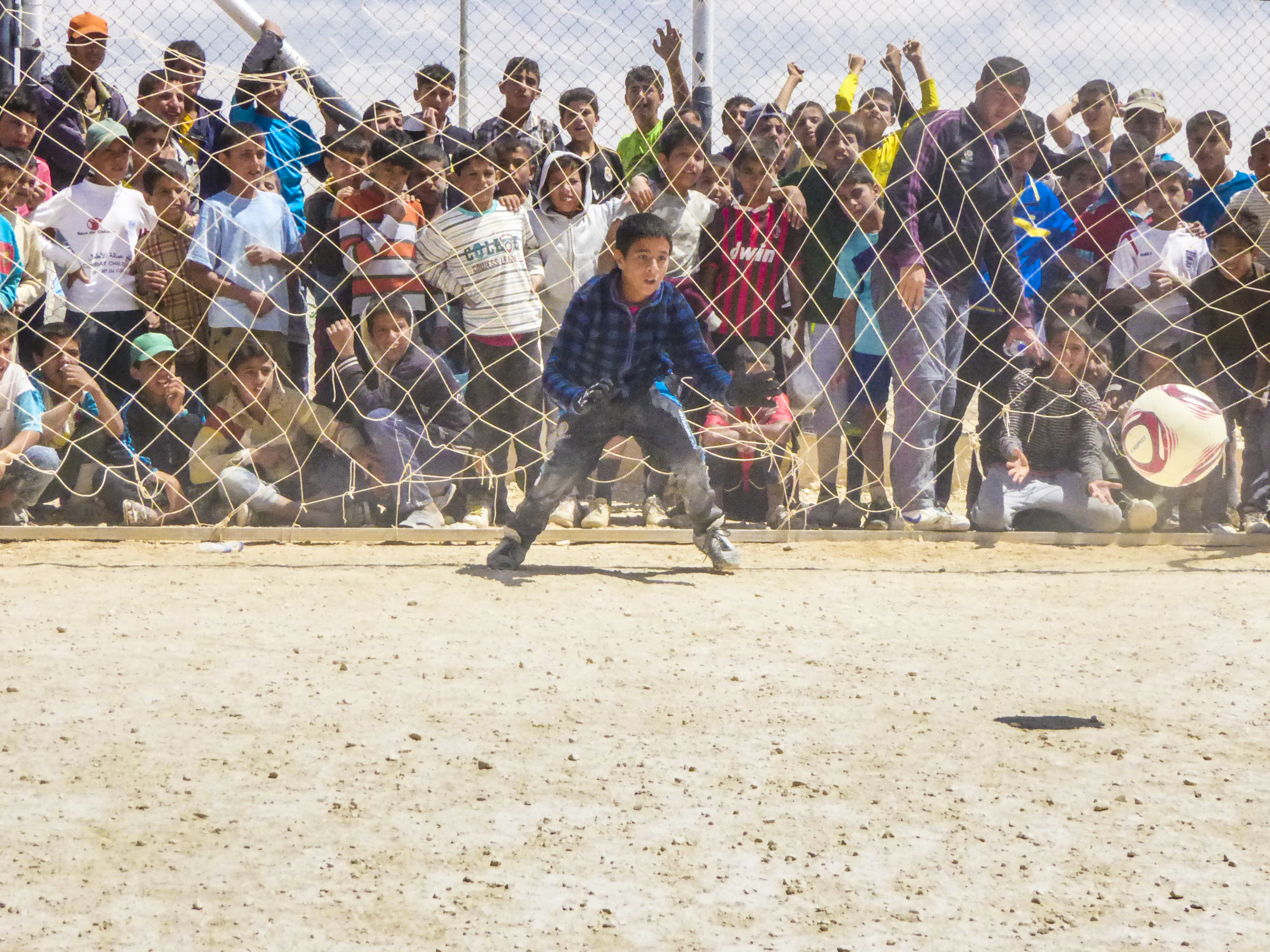
In Ukraine, that idea has taken on a particularly creative form. In regions contaminated by landmines, coaches from Safe Soccer, an organisation supported by the Foundation, have turned football itself into a safety tool — using play to teach children how to identify and avoid landmines. Football, quite literally, has become their shield.
In Gaza, where the need for psychological and medical support is acute, Sports for Life provides child-friendly spaces — sanctuaries where children can play, find distraction, and process their grief. It's a reminder to them that the world hasn't forgotten them.
In Rwanda, Amputee Junior Football Camps – also funded by the Foundation – offer hope to children who have lost limbs. When they join the Junior Camps, they're surrounded by peers and discover new strength in themselves. For me, that's what this work is really about: restoring dignity and confidence, one match at a time.
Sport keeps finding new purpose
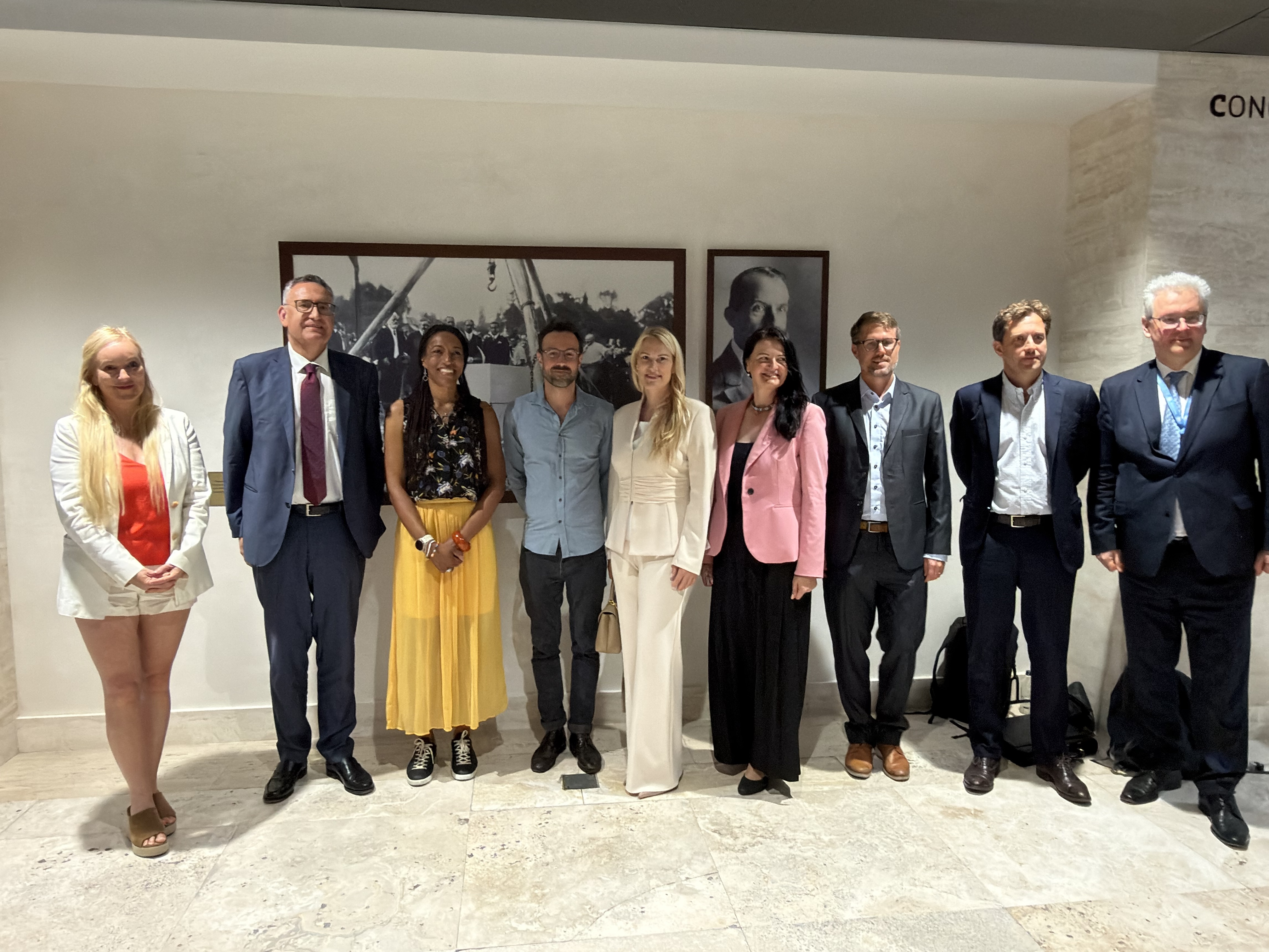
Listening to my colleagues speaking at the UN Human Rights Council panel, what struck me most was how the simple act of playing can help in some of the world’s harshest contexts. From the climbing walls of Damascus to the pickleball courts of Ukraine, sport keeps finding new purpose. Where infrastructure has been destroyed, it's often the low-barrier activities that rebuild communities from the ground up. Anna Glotova of the All-Ukrainian Pickleball Federation described how all it takes is a portable net and a flat surface to bring a smile back to people's faces.
“After climbing together, people aren't just refugees anymore — they become partners, even friends.”
- Beat Baggenstos, ClimbAID
Where displacement has fractured identities, Beat Baggenstos, founder of ClimbAID, explained how his organisation’s work across Lebanon, Syria, Greece and beyond shows that shared physical effort strips away political and national labels, leaving only mutual encouragement. After climbing together, he told us, people aren't just refugees anymore — they become partners, even friends. That shift happens by doing something together.
And where conflict has silenced entire nations, a single athletic achievement can offer a rare moment of collective hope. Olympic medallist Marlène Nidecker, speaking for Champions for Peace, put it simply: sport goes beyond medals — it builds a culture of peace and trust, and keeps hope alive.
Measuring success by participation
Across every context I've worked in, the pattern repeats itself. Sport creates a neutral space where veterans, displaced families and young people carrying invisible traumas can meet as equals. I've learned not to measure success by performance, but by participation. From taking part, new roles emerge: trainers, referees, community leaders. Sport isn't an escape from reality. It's a structured path back into it.
But I want to be honest — that potential doesn't fulfil itself. The Centre for Sport and Human Rights has rightly reminded us that governing bodies carry a responsibility to protect it. The destruction of athletes' livelihoods, the silencing of sporting communities — these are human rights issues, and our international sports community has to address them. UNHCR sees the same story from another angle. Their global lead on sport, Stephen Reynard, told us that refugees love sport, and that by partnering with the sports ecosystem, we can help give them a better lifeline.
Powerful tool for inclusion
I keep coming back to what I experienced first-hand in Zaatari. Even in the most difficult circumstances, children need space to play.
Sport alone cannot create lasting peace. I know that better than anyone. But it can restore confidence, connection and a sense of belonging — giving children and young people a reason to believe in a brighter future.
Football, to me, is the most powerful tool for inclusion we have.