

Location and general information
 Access to Sport -
  Gender Equality -
  Healthy lifestyle -
  Personal development -
  Strengthening partnerships
Context
Exercise, sport and play are fundamental components of a child’s development that promote curiosity, empathy, social interaction, learning, joy and much more. At the same time, language skills are a prerequisite for education, work and social life. In Switzerland, strong inequalities exist across both language development and physical activity, with children and young adults from disadvantaged backgrounds the most affected. These inequalities often impact school performance, physical and mental well-being and personal development. Experiences at an early age set the tone for life: establishing healthy habits, getting involved in sport and developing language skills while young can support well-being, fitness and future educational success.
Project goals
Overall goal
Provide equal access to educational and development opportunities and foster the social integration of children, especially girls, from migrant backgrounds through sport
Specific objectives
- Provide children with access to regular exercise and sport
- Enhance children's language and learning skills through a movement-based learning approach, using football as a motivational tool
- Encourage the development of personal and social skills through sport and play-based learning
Project content
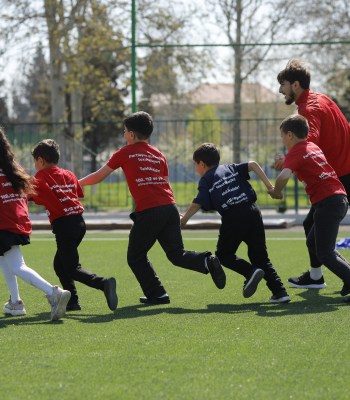
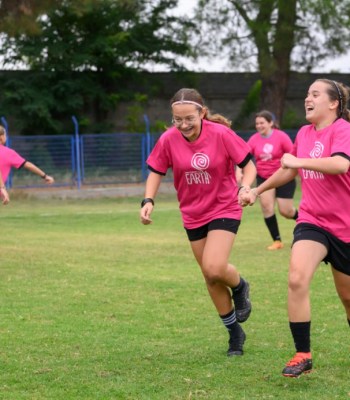
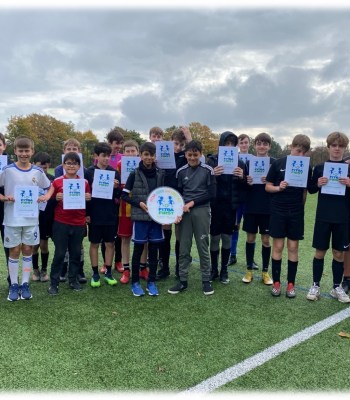
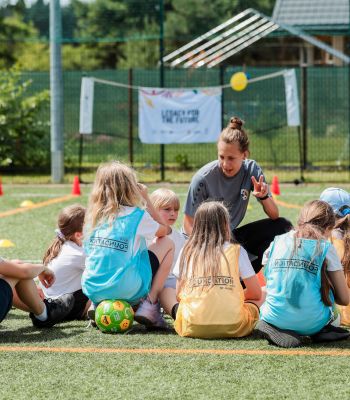
Football for Life uses football to support 8 to 13-year-olds from disadvantaged backgrounds. Weekly football training sessions that encourage language development and personal growth are combined with regular cultural events, such as a children’s press conference with professional football players.
The training sessions and cultural events are designed and delivered by multidisciplinary teams, including students, coaches from local grassroots sports clubs and teachers from participating primary schools. Focusing on football-related topics, the weekly training sessions take place at the schools and use playful and interactive methods, serving as dynamic opportunities for language practice. For example, children discuss player roles, explore team dynamics and collaboratively develop game strategies – all topics deliberately chosen to strengthen their language skills.
The sessions also focus on developing motor skills, football techniques and values such as fairness, teamwork and self-confidence. All project activities are centred around the development of personal and social skills and follow the Swiss Academy for Development’s established, award-winning approach, which fosters life skills through sport and play.
Partners