Location and general information
Access to Sport -
Conflict victims -
Employability -
Gender Equality -
Healthy lifestyle -
Personal developmentContext
Girls and young women in Europe face numerous challenges that impact their mental health, and studies show that these challenges are even more prevalent among refugees, who are likely to suffer higher rates of depression, PTSD, and anxiety disorders. Another concern linked to mental health pressures is the rate at which girls from all walks of life drop out of sport during adolescence.
Research shows that approximately 49% of girls stop participating in sports activities in their teenage years. Self-doubt and lack of confidence are among the main reasons. Other factors are societal pressures, body image concerns, and inadequate access to programmes specifically for women and girls. Marginalised girls and young women, like migrants, refugees, and stateless women, face additional difficulties in accessing education and life-skills training due to the systemic structures in place and economic and language barriers.
Societal expectations around the role of women remain an issue, as do the financial constraints and lack of role models that deter girls from playing sport recreationally or professionally. There is a direct connection between sport and mental health: a lack of sufficient physical activity can lead to heightened levels of anxiety and depression, and conversely, engagement in organised sport contributes to better self-esteem, social support, and a sense of belonging. And yet 85% of adolescent girls in Europe don’t meet the levels of activity recommended by the World Health Organization.
Project goals
Girl Power Leadership Academy
- Provide refugee and marginalised young women with access to coaching qualifications, including international exposure and mentorship
- Support young leaders in finding real-life applications for the things they have learned during the programme
- Provide young leaders with practical opportunities to make a difference in their communities, ensuring that the skills and knowledge acquired during the programme are effectively translated into tangible, positive outcomes for the benefit of the community and its younger generations in particular, reinforcing the importance of community leadership and the transformative power of sport
- Create a geographically and socially diverse network of female sports leaders who understand and promote the importance of girls and women in sport and in local communities, and the impact they can have, and who work to give back to the community
Girl Power Refugee World Cup
- Provide a space for young women in Europe to share their experiences and foster inclusion and integration through sport
- Create a place where young women can put their skills into practice, as players, coaches, speakers, panellists, communicators, representatives, etc.
- Showcase how football is driving positive change in communities
Project content
Our project introduces a groundbreaking, holistic model that merges five key pillars – physical activity, leadership education, mentorship, motivational storytelling and public speaking – into transformative activities.
We are launching a year-long, two-part youth leadership and coaching programme for 45 young refugee women in Denmark and other European countries where Girl Power is active. Future leaders will be aged 16 to 25 and selected based on their passion for sport and social change.
- Learning and development(six months)
This phase includes residential, in-person training over five days, supported by expert sessions on safe coaching pathways in girls’ football. Focusing on how to create inclusive, secure and empowering environments where girls feel safe to join and stay in the game, participants will explore issues such as safeguarding, inclusive leadership and coaching methodologies tailored to marginalised communities. - Practical football delivery(six months)
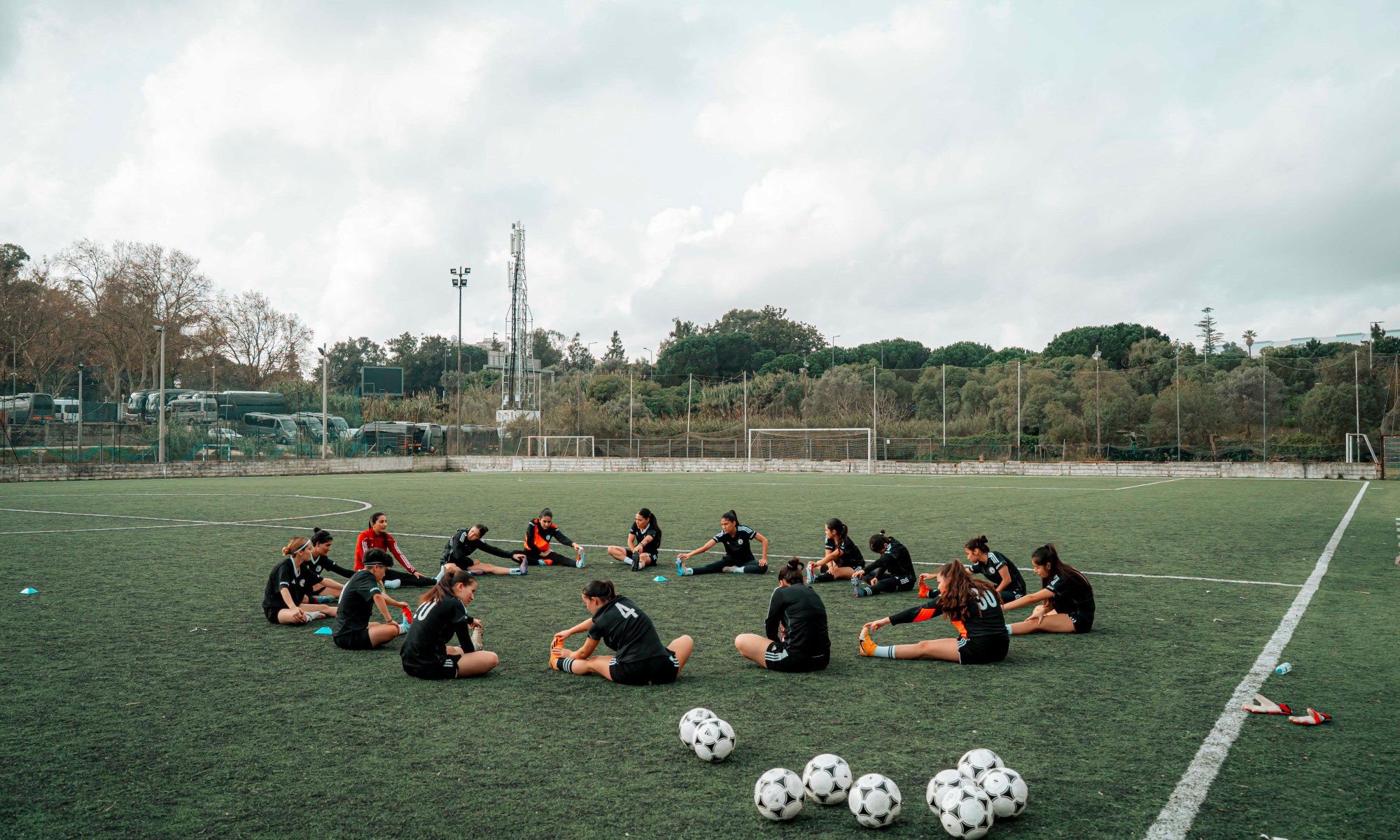
During this phase, each young leader will form a local girls’ football team that includes refugees and marginalised girls from their community. With the support of Girl Power mentors, they will lead weekly training sessions while being guided in their coaching journeys.
In Denmark, we will continue our weekly football sessions in two refugee and asylum centres, supporting children aged 10 to 13 and 13 to 16-year-old girls’ teams. Additionally, we will collaborate with local schools to deliver storytelling workshops and cultural festivals at which girls from our leadership programme will co-lead activities, promoting community leadership, hands-on learning and the exchange of narratives to foster friendship and connection between refugee and host communities.
We will also organise a refugee football World Cup in Denmark – a unique seven-a-side tournament for teams featuring at least three refugee players and at least three host country citizens. There will be two teams from Denmark and one team from each of the other European countries in which Girl Power is currently active: Germany, Greece, Portugal and the UK. The tournament will feature not only competitive matches but also a podium and panel series, giving space for players and coaches to share their personal stories and show how football is driving positive change in their communities.
All activities throughout the year will be documented and shared on our media channels to amplify their impact and inspire broader action. We will also feature some role models and influential young people to amplify the programme's positive stories and overall impact.

Infrastructure and equipment -
Children with disabilities -
Strengthening partnerships
Environmental protection -