

Location and general information
 Access to Sport -
  Children with disabilities -
  Conflict victims -
  Gender Equality -
  Healthy lifestyle -
  Personal development
Context
According to the Yemen Humanitarian Needs and Response Plan 2025, an estimated 19.5 million people across Yemen (1.3 million more than in 2024) need humanitarian assistance and protection services amid ongoing armed conflict, displacement and health emergencies. This represents more than half of the country's population, and children comprise over 55% of those in need (5.3 million girls and 5.5 million boys or 10.8 million children in all).
Within the scope of the project are also over 2,500 members of the Muhamasheen (the Arabic term for marginalised), a Yemeni underclass that has endured centuries of discrimination, exploitation and poverty. Conflict and displacement have further exacerbated their challenges, exposing them to heightened risks of gender-based violence, child marriage, trafficking, child labour, sexual exploitation and abuse. These vulnerabilities are compounded by limited access to essential services, education, healthcare, shelter and livelihoods.
Recent Helpcode data from the target area identified significant gaps in access to essential services such as child protection, psychosocial support and structured sports programmes. Parents reported that many children experienced emotional distress due to insecurity, displacement and exposure to violence, and reported behavioural issues such as acts of violence (53%), bullying (30%) and anger (12%). Approximately 67% of households reported children engaging in hazardous work such as selling khat, collecting plastics and begging. This not only deprives children of their right to education but also exposes them to exploitation, abuse and health risks.
Sports interventions can address protection gaps, promote resilience and foster social cohesion among vulnerable children and adolescents. Schools would have the potential to support such activities, particularly at the primary level, if they had the necessary equipment, coaches and resources. Of the 12 schools in the target area, only two girls' primary schools offer (limited) sports activities. At the secondary level, there are no sports programmes for boys or girls. Furthermore, none of the schools have locally trained coaches or organise after-school community sports initiatives, leaving children and adolescents with no structured physical exercise or recreation, putting them at greater risk of recruitment into armed groups, child marriage, exploitative labour, trafficking and other dangerous activities.
Project goals
- Improve the physical and psychosocial well-being of war-affected children and adolescents through structured sports programmes
- Use sport to promote tolerance, inclusion, resilience and respect within displaced and host communities
Project content
- Start-up workshops and community awareness-raising
A start-up workshop will be organised in each of the three governorates to introduce the project, discuss the roles and responsibilities of the various stakeholders, and raise awareness in the community about the objectives, activities, and expected outcomes.
- Community football teams
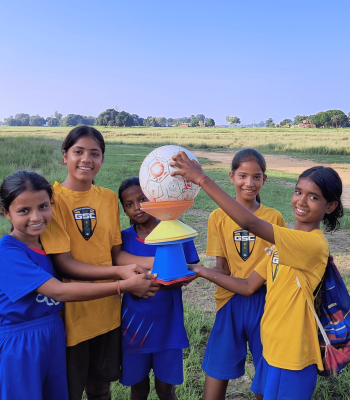
A total of 12 ‘cub’ teams (ages 10–14) and 12 youth teams (ages 15–25) will be set up, with a focus on including displaced, vulnerable, and marginalised youngsters, including girls where culturally appropriate.
- Community-based sports events and leagues
Regular leagues, intercommunity matches, and friendly tournaments will be organised to foster interaction, reduce tensions, and encourage unity among young people from different backgrounds. Activities will be organised in clusters.
- Sports equipment and uniforms
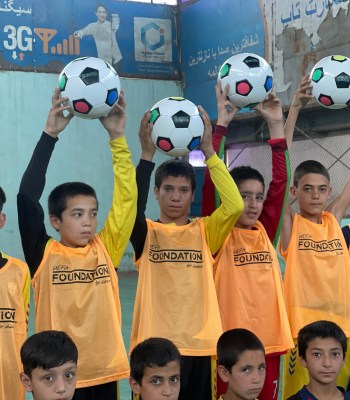
Footballs, team kits (shirts and shorts), cones, goals, markers, and first-aid kits will be given to the local teams, which will continue to benefit from them after the project ends.
- Awareness sessions
A total of 450 short, interactive awareness sessions will be organised at the community-based sports events and other gatherings on topics such as peacebuilding, acceptance, anti-discrimination and conflict resolution, in coordination with local schools, the Ministry of Youth and Sports, and community-based protection networks.
Partner